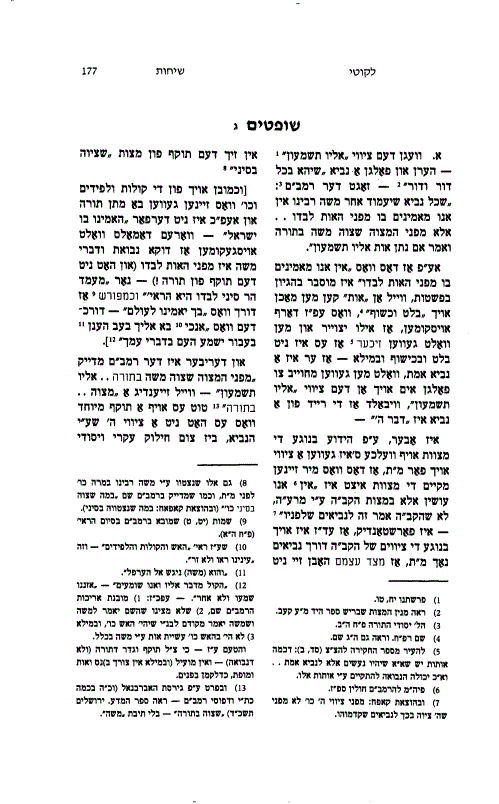
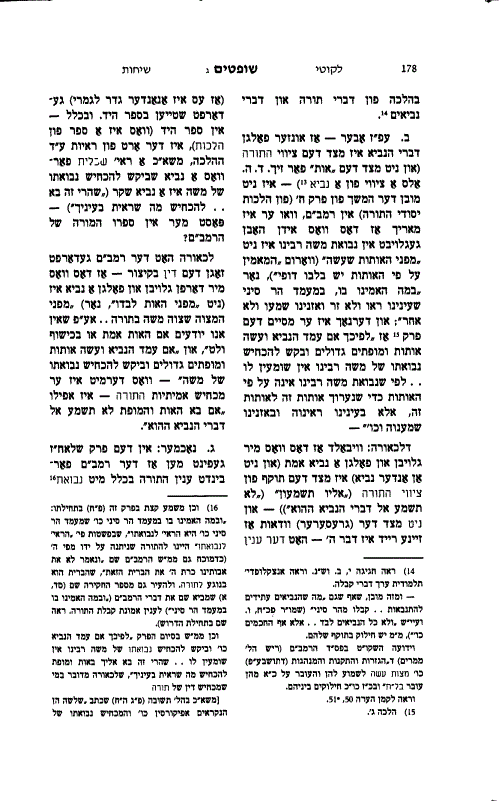
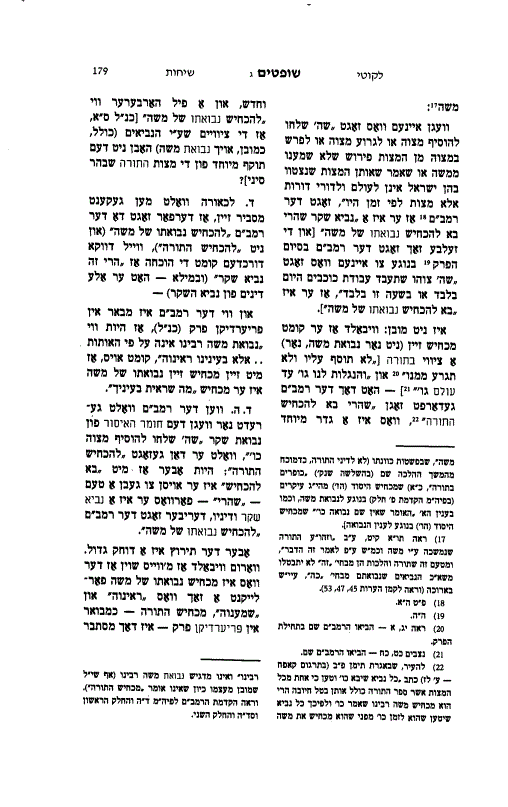
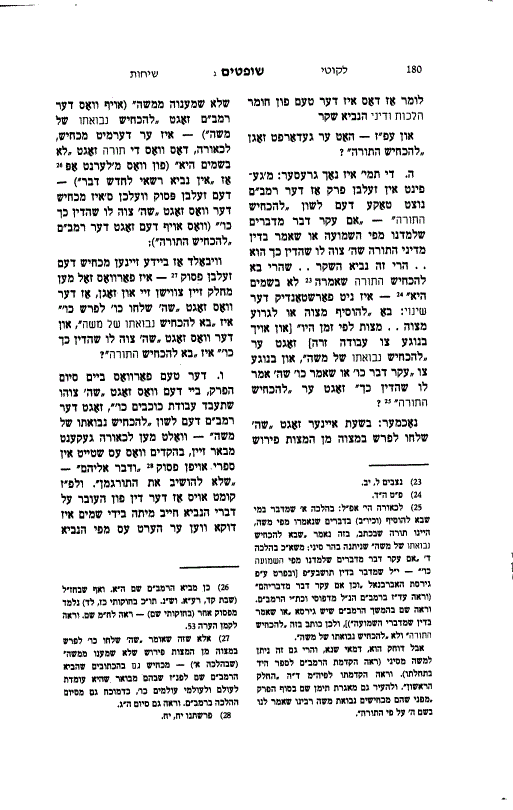
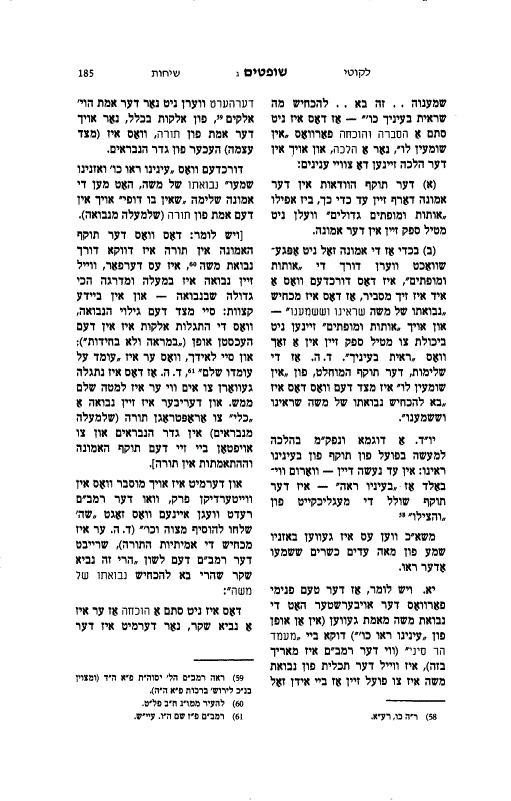
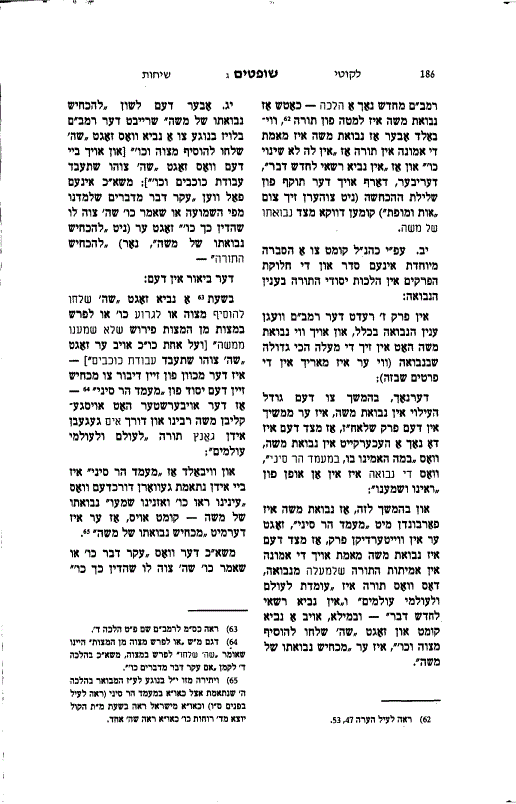
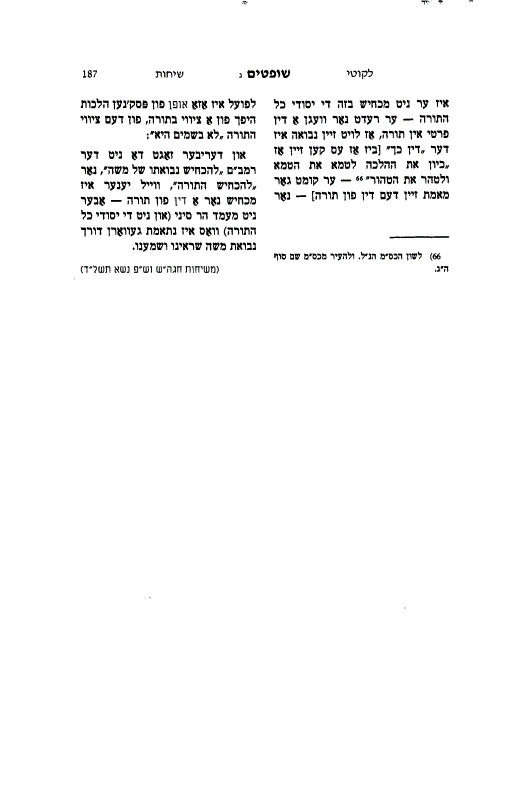
The Rambam explains that if a person comes to deny the prophecy of Moshe Rabbeinu, we do not believe him, because we ourselves saw with our own eyes and heard with our own ears the prophecy of Moshe.
This requires explanation. Why does the Rambam bring a logical explanation of this kind in the Mishneh Torah, rather than in the Moreh Nevuchim? Seemingly, he should simply have stated that such a person is denying the Torah itself.
Indeed, once Moshe’s prophecy was written in the Torah, it possesses a greater authority than ordinary prophecy. This is similar to the principle that we perform circumcision because Hashem commanded Moshe in the Torah, and not because of the prophecy given to Avraham.
The explanation is as follows:
Torah possesses a greater authority than the words of the prophets because Torah is the concept of “Ana Nafshi Kesavis Yehavis”—“I have written and given My very Self.” Torah expresses Hashem’s essential will. It does not exist for the sake of some other purpose.
Therefore, just as Hashem Himself does not change, Heaven forbid, so too the Torah does not change.
Prophecy, by contrast, generally serves another purpose: to instruct people to act in a certain manner, to warn them regarding particular matters, or to strengthen and encourage them in the observance of Torah.
Nevertheless, from the perspective of human beings, prophecy possesses an advantage.
Torah, in its essence, is above and beyond the parameters of created beings. Prophecy, however, is specifically the revelation of G‑dliness to created beings. Its purpose is that Divine truth should become revealed and perceptible within the world and to the people receiving the prophecy.
Moshe Rabbeinu’s prophecy therefore possesses both advantages.
Because his prophecy was verified at Matan Torah, it has the authority and permanence of Torah. At the same time, it retains the quality of prophecy: it reveals G‑dliness to created beings and has a direct effect upon them.
This explains the structure of the Rambam’s Hilchos Yesodei HaTorah.
In chapter 7, the Rambam explains that Moshe’s prophecy represents the highest possible level of prophecy.
Then, in chapter 8, he explains that because Moshe’s prophecy was verified at Matan Torah, it possesses the additional quality that “we saw with our own eyes and heard with our own ears.” Thus, it also has the absolute authority and truth of Torah, a level that is above ordinary prophecy.