לקוטי שיחות חלק יט - דברים ג

Likutei Sichos Vol. 19 – Devarim 3 – Moshe's Blessing Versus Hashem's Promise: Number and Infinity

This class explores the difference between Moshe's blessing to the Jewish people and Hashem's promise to Avraham, focusing on whether the blessing is limited by number or transcends it entirely. The discussion draws on Rashi, Midrash, Sifrei, and Chassidic teachings.

video

Note[1]

  1. 1 Ty. How did you understand the יינה של תורה in Devarim 3. It seems different than the sicha. He says that according to Rashi the number is smaller than according to Sifri. It seems in the main part of the sicha that
  2. according to Rashi there was “no number.”
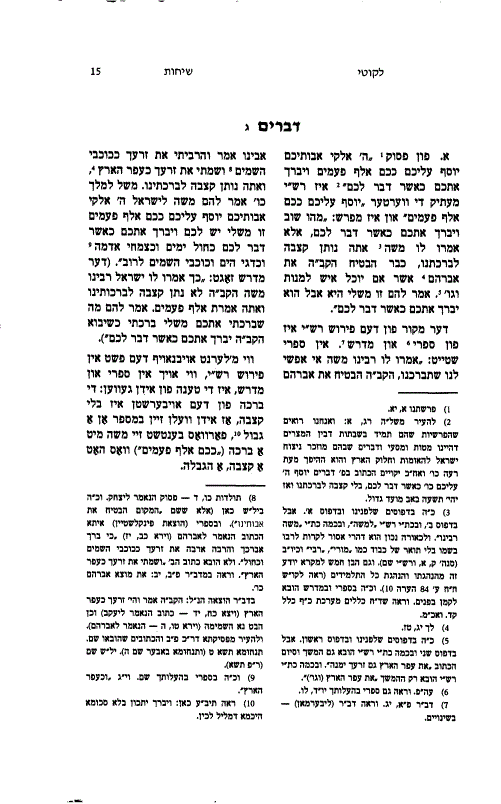
  3. כפי שאמרתי בההקלטה של השיחה לא הי' ברור לי כל כך. אבל לכאורה נראה שהפירוש הוא כדלקמן: החילוק בין הספרי לרש"י הוא שבספרי מביא הפסוקים של כככובי השמים, וכחול שעל שפת הים, ופירושו שהוא באמת בלי גבול, אלא שלפי שהוא בעולם הגשמי זה מתבטא באין מספר. וכיון שהוא בלי גבול הוא מעולמות אין סוף למעלה מהשתלשלות. ברש"י אינו מביא רק: אשר אם יוכל איש למנות, ולא הבלי גבול בפועל, (היינו הכוכבי השמים וחול הים וכו'), היינו שאין אנו מדברים על בלי גבול שבעולם הזה בפועל אלא על זה שמשה נתן גבול של אלף ולמה לו להגביל ולא להשאיר את זה מבלי להגבילן. א"כ ההגבלה של משה והבלי ההגבלה של הקב"ה הם רק אם נרגש ההגבלה או אין נרגש ההגבלה, אבל בעצם שניהם הם מוגבלים מעולם ההשתלשלות. אלא שמשה הוא מבינה והבלי ההגבלה בהעולם הוא מחכמה ששם אינו נרגש הכלי אבל שניהם מהאצילות לכן אומר אדמו"ר שלרש"י הם לא בריבוי מופלג כ"כ כי לרש"י אין אנו מדברים על הריבוי מופלג של הכוכבים והחול רק על זה שלדברי משה יש עליהם ההגבלות וברכת הקב"ה אין לבני ישראל במילים אחרות להספרי משה – הגבלה של מספר. הקב"ה - המספר הוא בלי גבול. לרש"י: משה – מגביל הקב"ה אינו מגביל
  4. Thank you for this. I was struggling thinking that "Bli Mispar" of Rashi is greater than "Kochvei Hashamayim etc" of the Medrash, but I can now see how it can be otherwise.


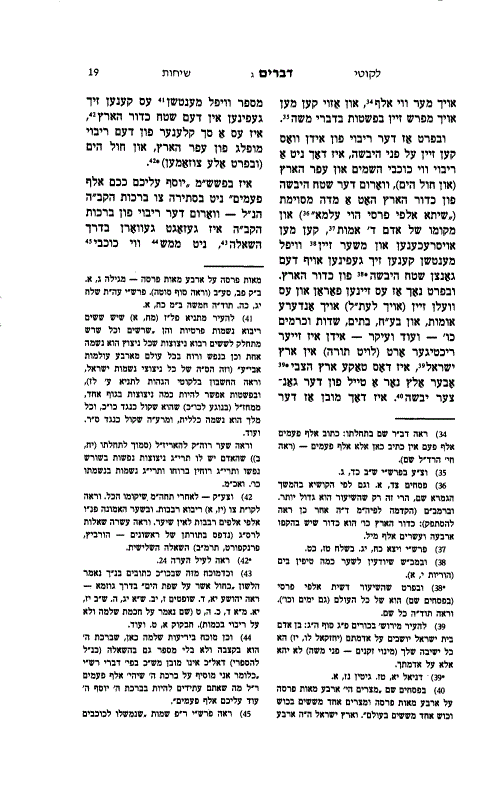
According to the Midrash and the Sifrei, the Jewish people’s claim was that Moshe’s blessing contained a smaller number than Hashem’s blessing. According to Rashi, however, their objection was not to the quantity of the number, but to the very fact that Moshe gave them a number when Hashem had promised that they would not be subject to the category of number.

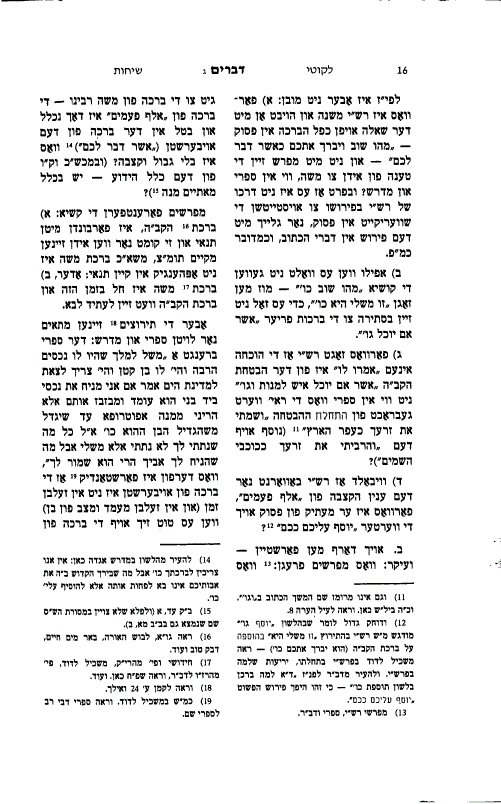
On the verse, “May Hashem your G‑d increase you a thousand times as many as you are, and bless you as He has spoken concerning you,” Rashi explains:

“What is the meaning of the additional phrase, ‘And bless you as He has spoken concerning you’? Rather, they said to him: ‘Moshe, you are placing a limit upon our blessing. Hashem has already promised Avraham, “If a person can count…”’ Moshe replied to them: ‘This blessing is my own, but He will bless you as He has spoken concerning you.’”

It must be understood why Rashi departs from his source in the Sifrei and the Midrash. Rashi begins with the question, “What is the meaning of the additional phrase, ‘And bless you as He has spoken concerning you’?” The Midrash and Sifrei, however, begin by presenting the Jewish people’s claim: “We do not wish for you to bless us. Hashem promised Avraham our father, ‘I will greatly multiply your descendants like the stars of the heavens.’”

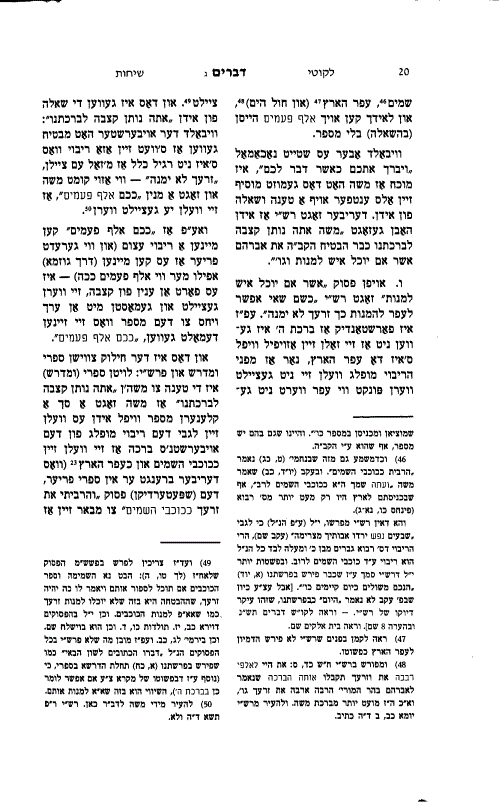
It must also be understood what Moshe’s blessing added after Hashem had already promised that the Jewish people would be so numerous that “no person would be able to count them.”

The explanation is as follows.

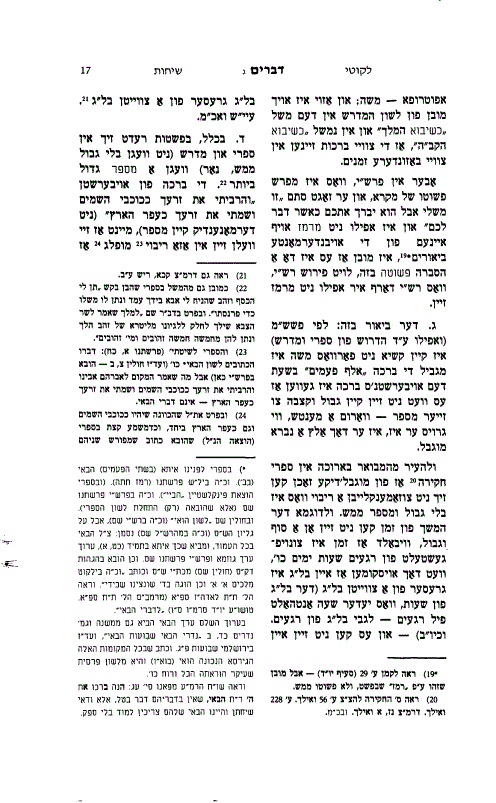
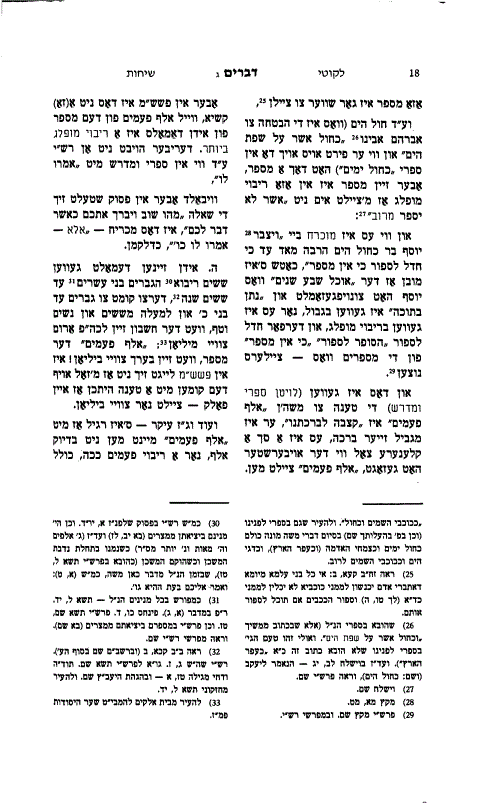
Even according to the Sifrei and the Midrash, Hashem’s promise that they would be “too numerous to count” does not mean that their number would be literally infinite. Rather, it means an exceedingly large number that would be difficult to count. This is evident from the verse, “Yosef gathered grain like the sand of the sea…until he stopped counting, for it was beyond number.” Clearly, the grain was not literally infinite.

According to the Midrash and Sifrei, the Jewish people’s claim to Moshe was therefore: Why are you limiting our blessing to “a thousand times,” which is a smaller and countable number?

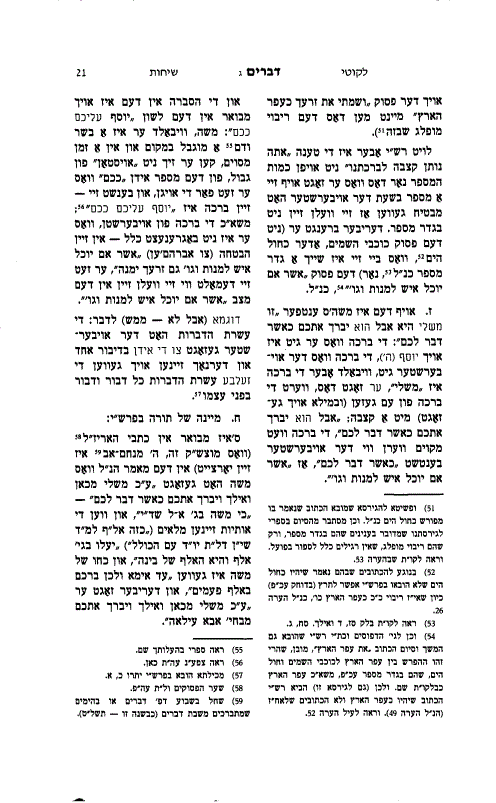
According to Rashi, however, following the straightforward meaning of the verse, this is not such a strong objection. A thousand times the number of Jewish people then living would itself be an enormous number—approximately two billion. Furthermore, Hashem’s promise that they would be “like the stars of the heavens” is figurative and does not mean literal infinity.

It is only from the fact that Moshe added, “And bless you as He has spoken concerning you,” that we see that Moshe found it necessary to answer an objection raised by the Jewish people.

According to the Midrash and Sifrei, their objection was that Moshe’s blessing contained a smaller number than Hashem’s blessing. According to Rashi, however, their objection concerned not the quantity of the number, but the very fact that Moshe placed them within the framework of number, whereas Hashem had promised that they would not be defined by number at all.

Moshe answered them, “This is my own blessing.” Since Moshe was a limited human being, he could not entirely detach himself from the limited state in which the Jewish people presently existed—“as many as you are.” His blessing, meaning the manner in which he comprehended Hashem’s blessing, therefore took a measured form: “May He increase you a thousand times as many as you are.”

“But He will bless you as He has spoken concerning you.” Hashem sees the Jewish people as they exist on the level described by the promise, “If a person can count…,” entirely beyond the limitations of number.

The Inner Dimension of Torah

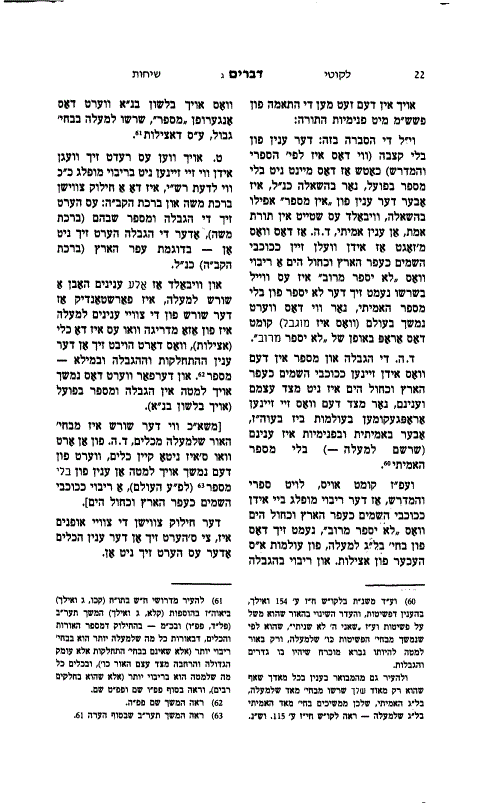
The writings of the Arizal explain that the numerical value of the name Moshe is equal to that of the Divine name Kel Shakkai. When the letters of this Divine name are spelled out in full, together with the kollel, their numerical value is one thousand.

This is the “thousand” of Binah. Hashem, however, would bless them from the level of Chochmah.

Here we see the harmony between the straightforward meaning of the Torah and its inner dimension.

According to the Midrash, Hashem’s blessing comes from the level of Kesser. Although the expression “too numerous to count” is only figurative and does not mean literal infinity, its source is the fact that the root of the Jewish people is in Kesser, a level of true infinity. A great multitude that nevertheless remains limited has its source in the realm of limitation—the Ten Sefiros of Atzilus.

According to Rashi, however, the difference between Hashem’s blessing, in which the number is not felt, and Moshe’s blessing, in which the number is felt, is as follows:

Moshe’s blessing comes from Binah, where the keilim are perceptible. The keilim represent limitation and number. Hashem’s blessing, however, comes from Chochmah, the level at which “He and His keilim are one,” and the limitation of the keilim is not felt.


Leave Feedback