.
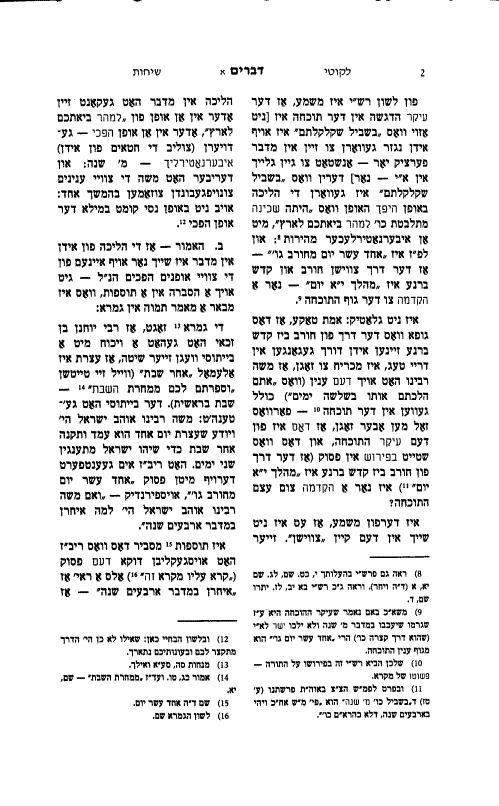
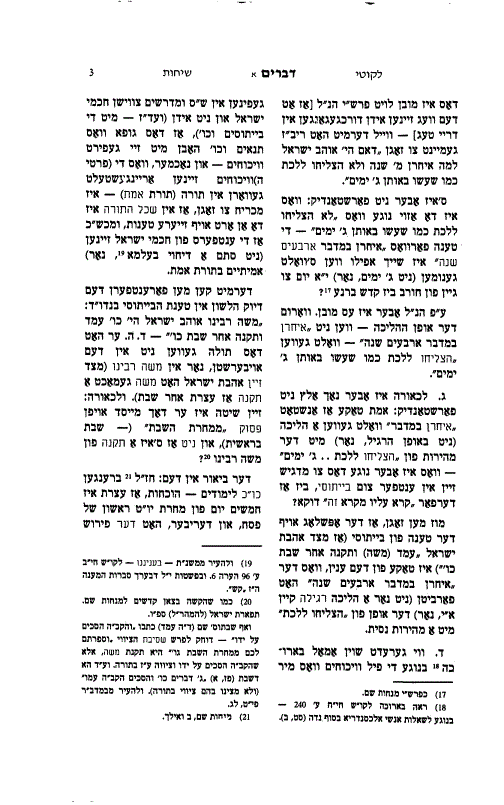
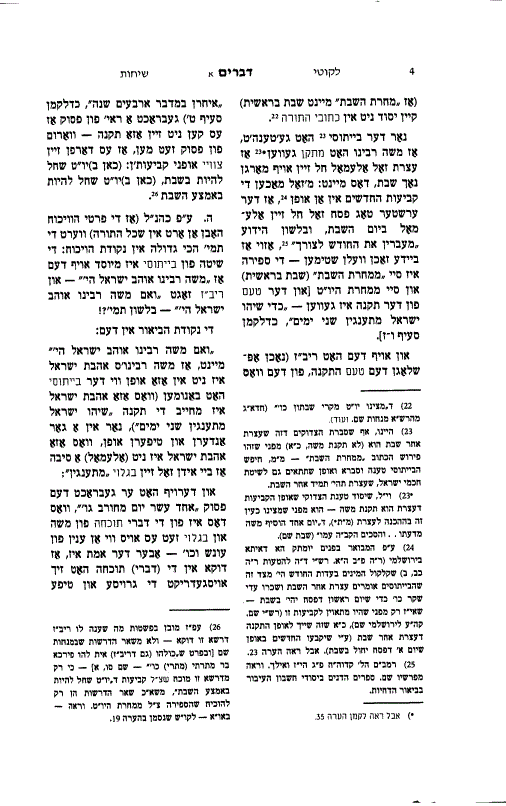
The Beisusim argued that Shavuos must occur after Shabbos, because they believed that the primary virtue lies in something that comes from above. This was also the reason they did not accept the Oral Torah. In truth, however, the ultimate good is achieved when the Torah becomes invested within the lower realm. Therefore, because “Moshe rebuked them because he loved them,” the Jewish people remained in the desert for forty years and attained attachment to Hashem through their own efforts.
The verse states:
“It is an eleven-day journey from Chorev, by way of Mount Seir, to Kadesh Barnea.”
Rashi explains that the Jewish people traveled this route in three days, but their sin caused them to remain in the desert for forty years.
The fact that Rashi mentions that they traveled this route in three days—even though this is not stated explicitly in the verse—indicates that there were only two possible extremes: either the journey would occur miraculously, or they would be delayed in the desert for forty years.
Based on this, we can understand the Gemara in Menachos concerning the debate between Rabbi Yochanan ben Zakkai and a Beisusi.
The Beisusi argued that Moshe Rabbeinu loved the Jewish people and therefore established Shavuos after Shabbos, so that they would enjoy two consecutive days of celebration.
Rabbi Yochanan ben Zakkai responded that, if Moshe loved the Jewish people, “why did he delay them in the desert for forty years?” He then applied to him the verse, “It is an eleven-day journey from Chorev.”
Tosafos explains:
“If he loved the Jewish people, why did he delay them for forty years and not enable them to travel successfully as they did during those three days?”
Seemingly, why is it necessary to emphasize that “he did not enable them to travel successfully as they did during those three days”? The argument, “Why did he delay them in the desert for forty years?” would apply even if the journey from Chorev to Kadesh Barnea had taken the full eleven days.
According to the above, however, it is understood why Tosafos emphasizes that they traveled this route successfully in three days. As explained, there were only two opposite possibilities: either Moshe would enable them to complete the journey in three days, or he would delay them in the desert for forty years.
Nevertheless, the argument of the Beisusi recorded in the Gemara was not entirely without basis.
Although according to the Torah Shavuos does not necessarily have to occur after Shabbos, as explained by the Sages of Israel, the Beisusi argued that because of Moshe’s love for the Jewish people, he would have arranged the calendar so that Shavuos would always fall immediately after Shabbos.
Shavuos represents the fiftieth gate, which is attained after the avodah of the Jewish people. The fiftieth gate itself is bestowed from above. The Beisusim therefore argued that Shavuos must follow Shabbos, because Shabbos is also a holiness that comes from above: “Shabbos is sanctified and established on its own.”
This also explains why they believed only in the Written Torah, which comes from above, and did not accept the Oral Torah. The Oral Torah is the Torah as it becomes invested within the understanding of the Sages of Israel.
They therefore maintained that Moshe’s love should be expressed through something bestowed from above—by placing Shavuos immediately after Shabbos.
The truth, however, is that the ultimate good is achieved when the Torah descends and becomes invested within the lower realm, so that the human intellect itself understands Hashem’s Torah. Therefore, the Giving of the Torah does not have to occur immediately after Shabbos.
Through remaining in the desert for forty years, the Jewish people attained the superior quality of teshuvah. This follows the Rambam’s lengthy explanation of the greatness of one who withstands a test. Through their own avodah, they reached the level described by the verse:
“You who cleave to Hashem your G‑d.”
Had this elevation come directly from Hashem above, it would have occurred rapidly, within three days. However, because “Moshe rebuked them because he loved them,” Moshe’s true love was expressed primarily through their remaining in the desert for forty years and attaining attachment to Hashem through their own efforts.