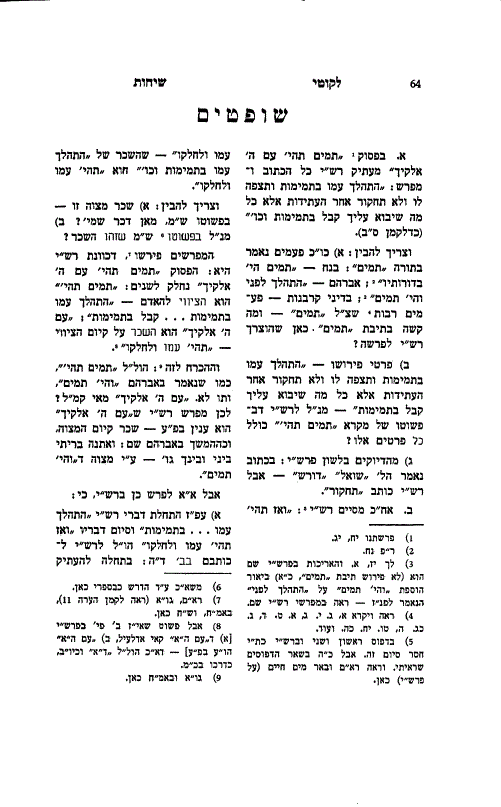
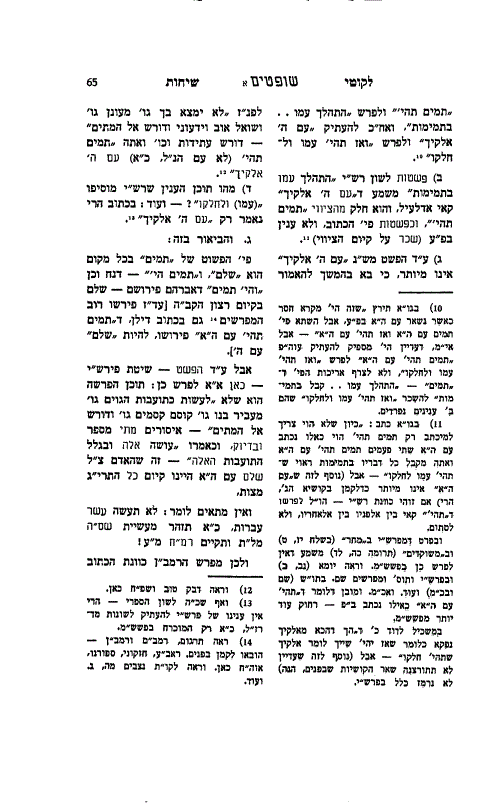
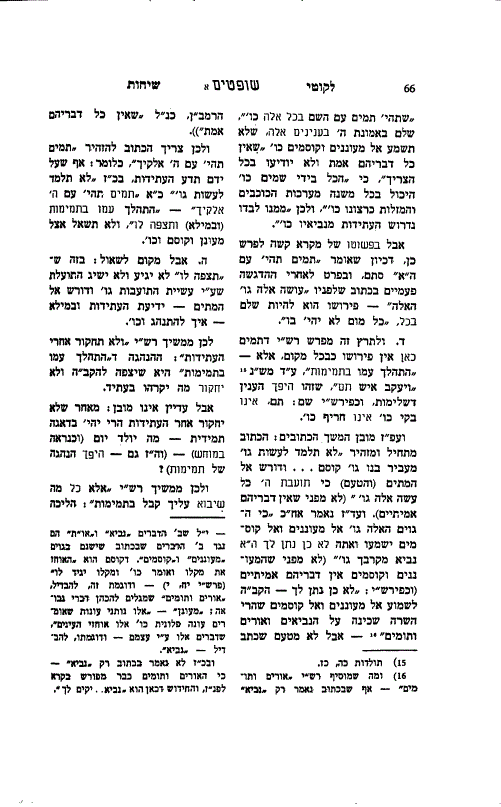
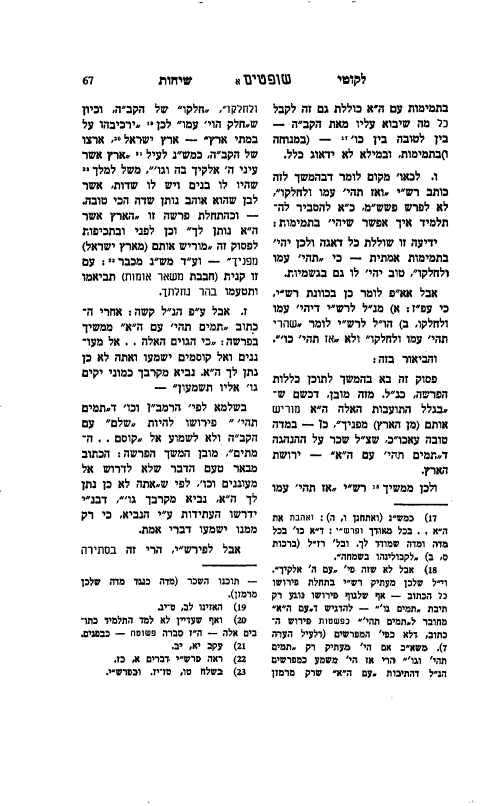
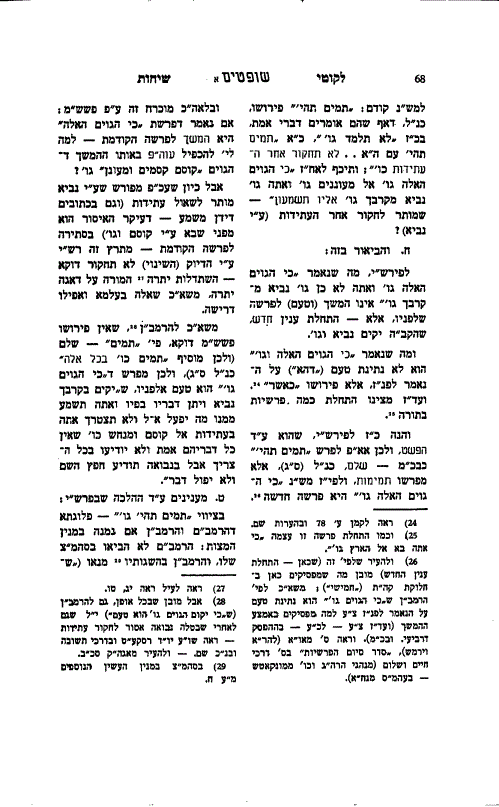
Rashi comments on the verse (Devarim 18:13):
“‘You shall be wholehearted with Hashem your G‑d’: Walk with Him in simplicity and look to Him. Do not investigate the future; rather, whatever comes upon you, accept it with simplicity, and then you will be with Him and become His portion.”
This requires explanation.
The word tamim appears earlier in Scripture, and Rashi does not explain it there. What compels Rashi, according to the straightforward meaning of the verse, to explain that “tamim” here includes all these ideas? And what compels him to add that there is a reward for this—“then you will be with Him and become His portion”?
If the words “with Hashem your G‑d” were, as some commentators on Rashi explain, an entirely new matter describing the reward, Rashi should seemingly have explained them in a separate heading.
The explanation is as follows:
Generally, the meaning of tamim is “complete” or “whole.” Here, however, it cannot have that meaning. The commandments discussed in this section—the prohibitions against following astrologers, diviners, and the like—amount to only approximately ten mitzvos. They do not encompass all the mitzvos.
Therefore, in this context tamim cannot mean completeness in the sense of fulfilling all 613 mitzvos. It would not fit the context for the Torah to say, in effect: Do not merely fulfill these ten commandments; rather, fulfill all 613 mitzvos.
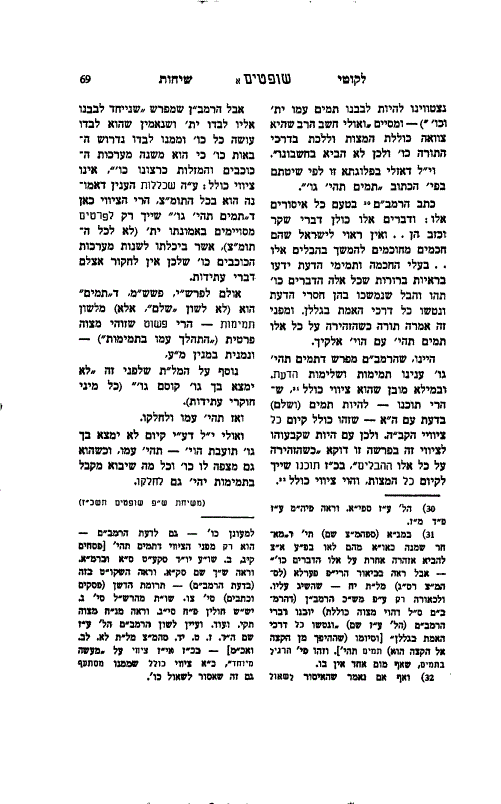
Rashi therefore explains that tamimus here has a different meaning from its usual meaning of completeness. It is similar to the description of Yaakov as “ish tam”, a simple or wholehearted man, which Rashi explains as meaning that he was “not clever in deceiving.”
The Ramban understands the mitzvah differently. In his view, the command is to believe that Hashem has the power to alter the influence of the constellations and celestial forces. Therefore, there is no reason to seek information from astrologers and diviners.
Rashi, however, understands the mitzvah to be one of tamimus itself: do not investigate the future, but walk with Hashem in simplicity. Do not worry excessively about what is going to happen. Whatever comes upon you, accept it with wholehearted trust.
Now, earlier in this section the Torah states, “Because of these abominations Hashem your G‑d is dispossessing them before you.” Rashi therefore explains that through fulfilling this mitzvah of tamimus, a Jew becomes part of Hashem’s portion, and consequently merits Eretz Yisroel, which is Hashem’s land.
Later in the parsha, the Torah says that Hashem will establish a prophet for the Jewish people. At first glance, this seems to contradict the command not to investigate the future.
The answer is that the passage concerning the prophet is a separate section and is not a continuation of “You shall be wholehearted.” The word ki there means “when.”
Furthermore, although it is permitted to ask a prophet, the command “do not investigate the future” means that one should not pursue knowledge of the future with excessive effort, in a manner that expresses excessive anxiety and concern.
There is also a difference here from the perspective of halachah.
The Rambam does not count this command as a separate mitzvah, because he understands it as a general command. The Rambam maintains that astrology, divination, and similar practices are meaningless falsehoods, and the command here is one of completeness of mind and understanding. Such completeness of mind is attained through fulfilling all of Hashem’s commandments.
The Ramban, by contrast, maintains that the mitzvah is to believe that Hashem can alter the celestial order. According to him, this is a specific command and is therefore counted among the mitzvos.
Similarly, according to Rashi, since the content of the command is the particular quality of tamimus—walking with Hashem in wholehearted simplicity—it is a specific mitzvah and is counted among the mitzvos.