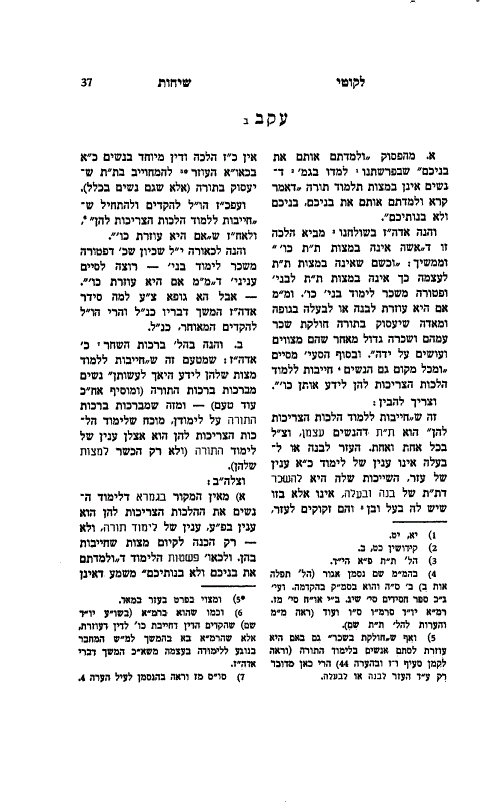
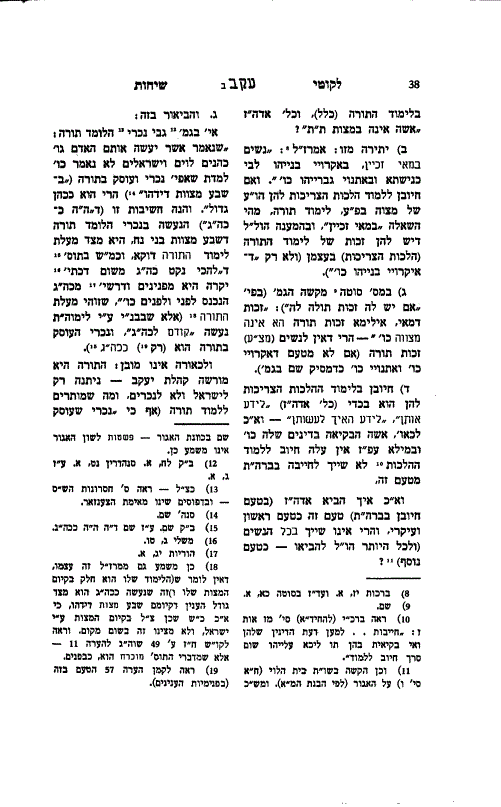
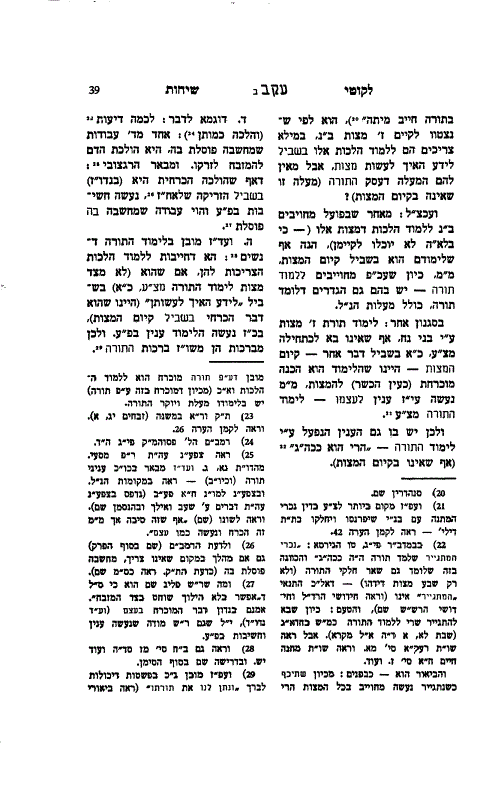
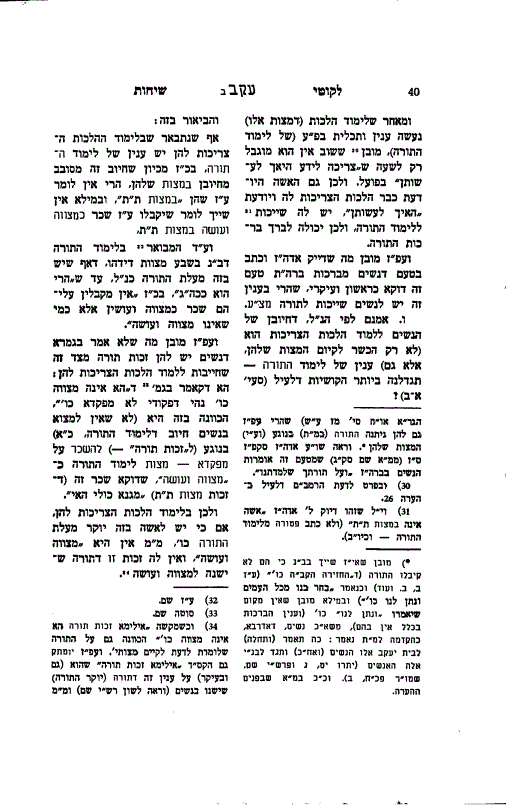
The Alter Rebbe mentions, “If she assists her husband, she shares the reward with them,” before discussing women’s obligation to study the halachos that are necessary for them, because women’s connection to the reward of the mitzvah of Torah study comes through assisting their husbands and sons.
The Gemara states that women are exempt from Torah study, based on the verse, “You shall teach them to your sons”—your sons, but not your daughters.
The Alter Rebbe continues in his Shulchan Aruch:
“Just as she is not obligated in the mitzvah of Torah study for herself, so too, she is not obligated in the mitzvah of Torah study for her sons, and she is exempt from paying for their instruction. Nevertheless, if she assists her husband, she shares the reward with them. Nevertheless, women are also obligated to study the halachos that are necessary for them to know.”
This requires explanation. Seemingly, the Alter Rebbe should first have stated women’s obligation to study the halachos that are necessary for them, since this is an aspect of Torah study itself and not merely a matter of receiving reward. Why, then, does he first state, “If she assists her husband, she shares the reward with them”?
Regarding the blessings over Torah study, the Alter Rebbe writes that women recite the blessings over Torah because they are obligated to study the halachos that are necessary for them.
This also requires explanation. What is the source for considering their study of these halachos to be within the category of Torah study, rather than merely preparation for performing the mitzvos and knowing “the deed that they must do”?
The explanation is as follows:
The Gemara states that a non-Jew who studies the mitzvos that apply to him is comparable to a Kohen Gadol. This proves that although his learning is intended to enable him to know the deeds that he must perform, nevertheless, because this knowledge is essential for the fulfillment of the mitzvah, he is obligated to study Torah. Therefore, this learning has the status of the mitzvah of Torah study.
The same applies to women. Their study of the halachos necessary for their observance is considered Torah study, and therefore they recite the blessings over Torah, as stated above.
The reason the Alter Rebbe does not begin with this point in the laws of Torah study is that although women have a connection to the category of Torah study, they are not, in their own right, obligated in the mitzvah of Torah study. Therefore, it cannot be said that they receive the reward of one who is commanded and performs the mitzvah of Torah study.
Their connection to the reward of the mitzvah of Torah study comes through assisting their husbands and sons. In that case, a woman receives the reward of the mitzvah of Torah study—“she shares the reward with them.”
The Alter Rebbe says that she “shares” the reward, rather than that she merely “receives” reward. This means that she has a direct connection to the reward of her husband’s mitzvah of Torah study.
Because her assistance is essential, she has a share in the reward of the mitzvah, “since they are commanded and fulfill it through her assistance.”
This is similar to what is explained regarding the mitzvah of being fruitful and multiplying. Although a woman is not commanded in this mitzvah, nevertheless, because it cannot be fulfilled without her, she receives the reward of the great mitzvah of being fruitful and multiplying.
In the inner dimension of the matter, the Holy One, blessed be He, and the Jewish people are compared to a husband and wife. The purpose of creation is, “Fill the earth and conquer it”—to draw holiness into the world.
However, “it is the way of a man”—through his strength—“to conquer.” A woman, on her own, cannot change the nature of the world.
Yet when the woman unites herself with Torah and assists Torah in conquering the world, she becomes an active partner—a “partner with the Holy One, blessed be He, in the work of Creation.”