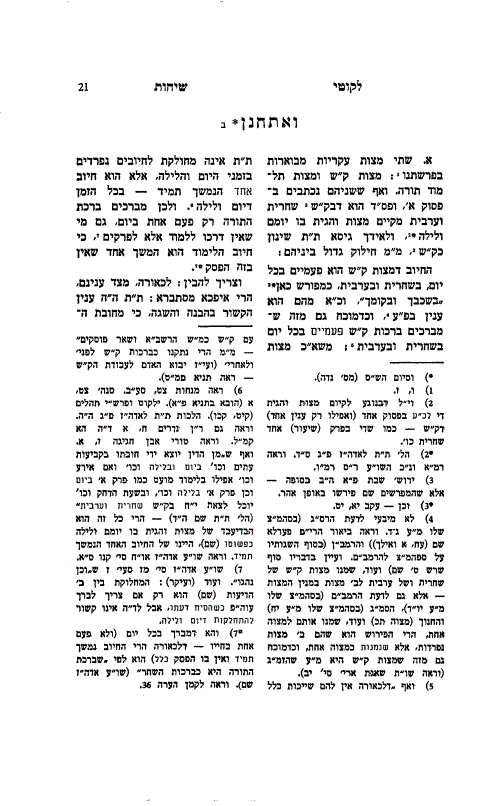
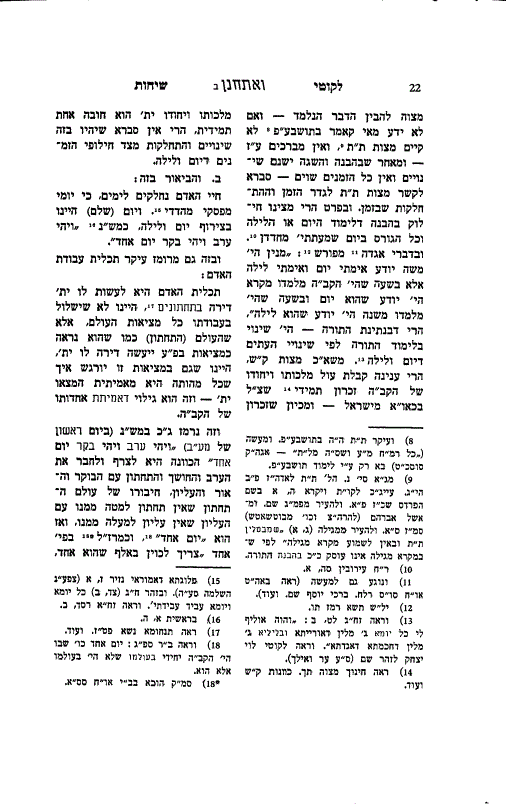
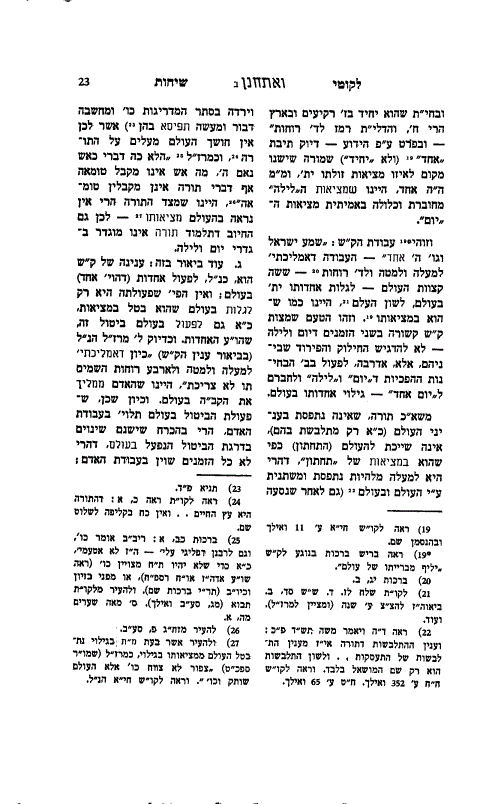
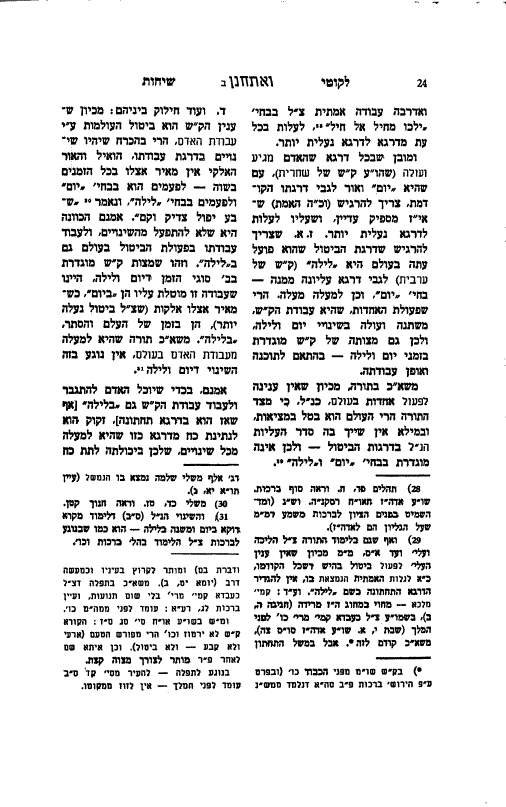
The mitzvah of reciting Shema applies in the morning and in the evening. The purpose of Shema is to bring about the revelation of the Holy One, blessed be He’s unity within the world. This is emphasized by reciting Shema both morning and evening, thereby connecting all the distinctions that exist within the world—night and morning—with His blessed unity. Torah, by contrast, is above the world and is therefore not defined by the boundaries of day and night.
It must be understood why the mitzvah of reciting Shema, whose purpose is the acceptance of the sovereignty of Heaven and which would seemingly apply equally at all times, is fulfilled twice each day. This indicates that there are differences between morning and evening. The mitzvah of Torah study, however, in which it would seemingly appear that not all times are equal, is a constant mitzvah. Therefore, the blessing over Torah study is recited only once each day.
The explanation is that the purpose of Shema is to bring about the revelation of the Holy One, blessed be He’s unity within the world. This is emphasized by reciting Shema in the morning and in the evening, for all the distinctions found within the world—night and morning—are thereby united with His blessed unity. Torah, by contrast, is above the world and is therefore not defined by the parameters of day and night.
A further explanation is that Shema refers to man’s Divine service of bringing about bittul, self-nullification, within the world. This service contains many different levels. A person must therefore recognize that the degree of bittul he attained today, although it is considered “morning” in comparison with the level of his service yesterday, is still “evening” in comparison with the elevation he must attain afterward.
A further explanation is that this service must be performed even when a person is on the level of “evening,” during a time of concealment and obscurity. Torah, however, is above man’s service within the world, and therefore the changes between day and night are not relevant to it.
This explains the connection between the beginning of the Talmud—concerning the recitation of Shema in the evening—and the conclusion of the Talmud—“One who studies halachos every day.” The strength to serve Hashem even during a time of “evening” comes from the halachos of the Torah, which represent unity within Torah itself and are above all change.
This also explains the connection between this teaching and the preceding teaching:
“Rabbi Shemaya said to him: Say that during the daytime she should be considered a zavah, while at night she should be considered a niddah. He answered him: Concerning you, Scripture states, ‘In addition to her state of niddah’—close to the time of her niddah. When is it close to the time of her niddah? At night, and yet Scripture calls her a zavah.”
By way of introduction, the blood of niddah derives from the evil that entered man through the sin of the Tree of Knowledge. This became part of man’s nature, and man must reject this evil. However, since the level of the beinoni is attainable by every person, the evil reawakens each month and must be rejected anew. This is the spiritual meaning of niddah.
Zavah, however, means that the evil awakens earlier than usual. Clearly, this also indicates an increase in the severity and quality of the evil. Therefore, a greater purification is required—the counting of seven clean days.
The initial supposition was that the status of zavah could apply only during the day. At night, during a time of concealment and obscurity, the impurity of zavah would not be considered an illness or an abnormal condition, but something ordinary.
The conclusion, however, is: “Concerning you, Scripture states.” Through the power of Torah, a person is able to perform his Divine service in such a way that even during the “night,” he should have no connection to the appearance of blood. Therefore, even at night, such blood is considered the blood of zavah—an abnormal condition that must be rejected and purified.