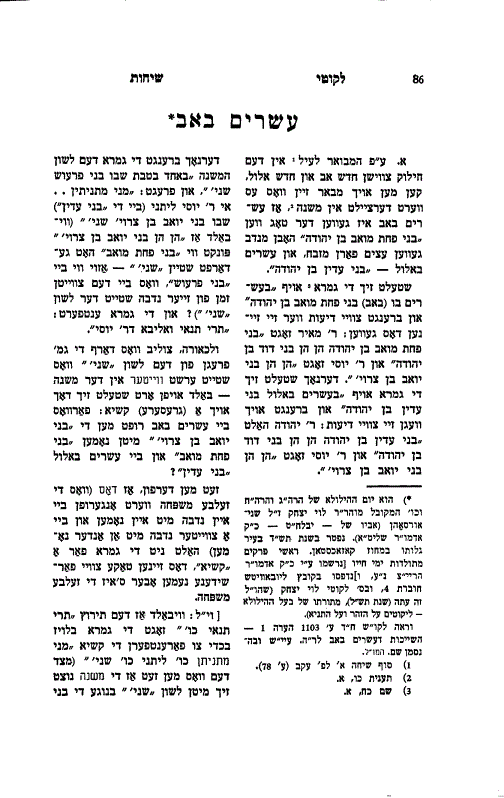
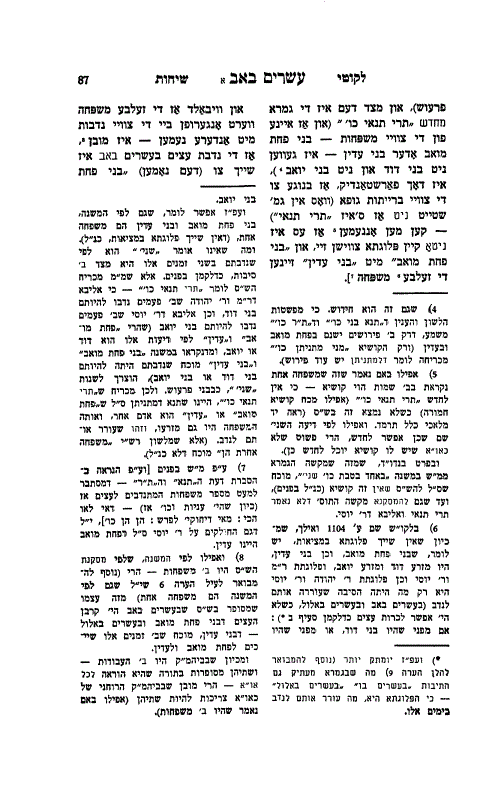

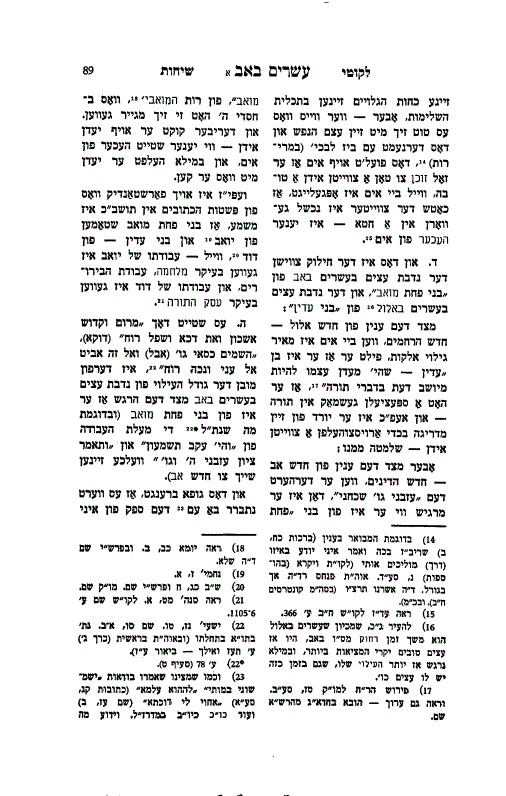
During the month of Av—the bitterness that results from the attribute of judgment—a person feels that he is not superior to his fellow.
The Mishnah states:
“On the twentieth of Av, the descendants of Pachas Moav ben Yehudah brought wood; on the twentieth of Elul, the descendants of Adin ben Yehudah brought wood.”
It may be said that donating wood after the fifteenth of Av, when suitable wood for the altar was no longer readily available, possessed an especially great virtue.
Nevertheless, there is a distinction between the month of Av and the month of Elul.
Elul is the month of Divine mercy. This is alluded to by the name “the descendants of Adin,” which suggests gentleness and refinement. During Elul, a person may feel that he stands on a higher spiritual level and lowers himself from that level in order to help another.
The month of Av, however, is characterized by the bitterness associated with the attribute of judgment. This is alluded to by the name “the descendants of Moav,” associated with Ruth the Moabite, who converted through Hashem’s kindness.
During Av, a person feels that he is not above his fellow. After all, who can know the true level at which the essence of his own soul stands? He therefore recognizes that he is not spiritually superior to the other person.
This level is even higher, as the verse states:
“I dwell in a high and holy place, and also with the contrite and lowly of spirit.”
Hashem’s loftiest presence rests specifically with one who possesses genuine humility and does not consider himself greater than another.