
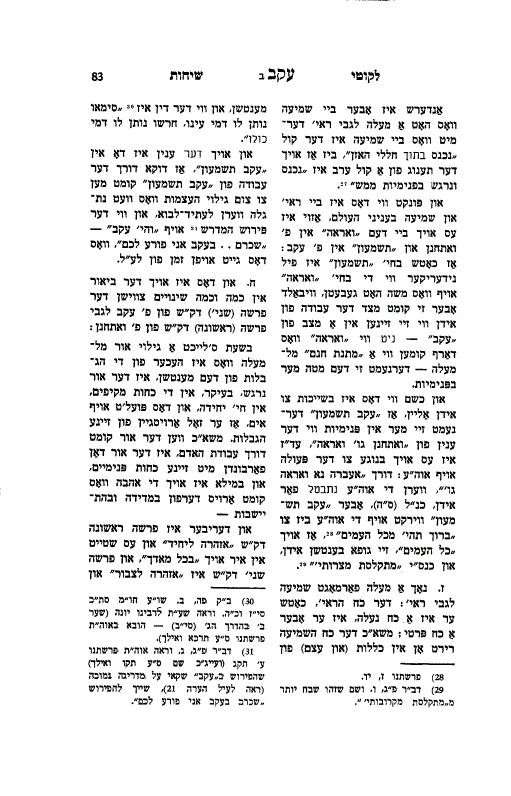
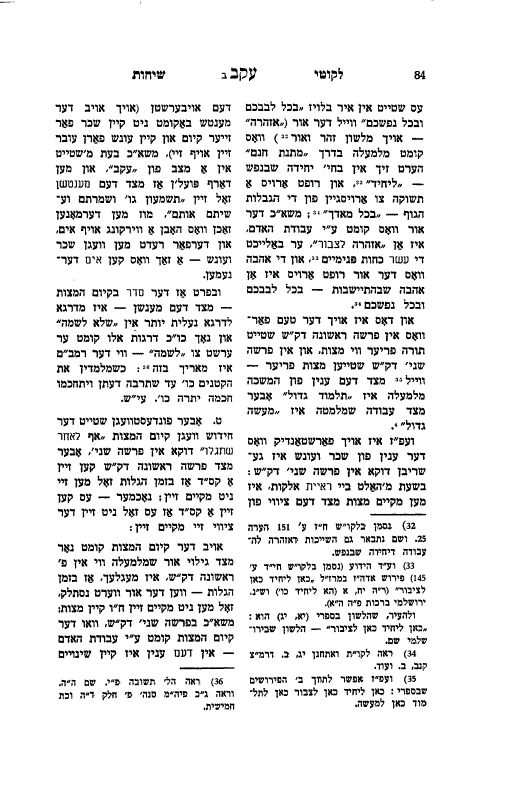
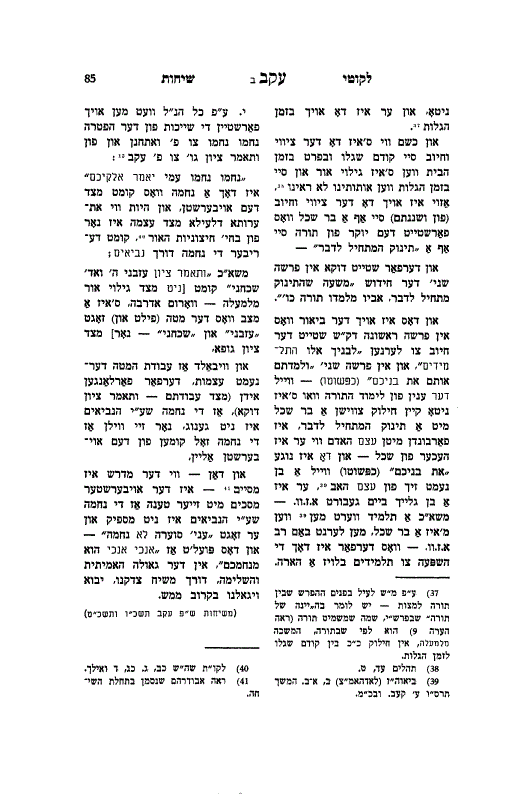
Va’eschanan denotes a free gift—a revelation from Above. Therefore, the service associated with it is “with all your might.” Parshas Eikev, by contrast, speaks of a time when no revelation of G‑dliness shines from Above. Therefore, the service is only through the revealed powers: “with all your heart and with all your soul.” In this setting, “deed is greater,” and because the service is performed through man’s own strength, it applies “even after you are exiled.”
The difference between Parshas Eikev and Parshas Va’eschanan can be seen by examining what they share: both contain a passage of the Shema. There are, however, several differences between the first and second passages.
In the first passage of the Shema, it says, “with all your might”; Torah study is mentioned before mitzvos; and the passage is written in the singular. The haftarah of Parshas Va’eschanan is also “Comfort, comfort My people.”
In the second passage of the Shema, it does not say, “with all your might”; mitzvos are mentioned before Torah study; and the passage is written in the plural. According to Rashi, the reason the commandments of tefillin and mezuzah are repeated is to include their observance “even after you are exiled.”
The explanation is as follows:
Va’eschanan denotes a free gift—a revelation from Above. Therefore, Moshe, whose face was like the sun, wished to see Eretz Yisrael in order to bring about a state of seeing G‑dliness.
A revelation from Above affects the soul’s encompassing powers of chayah and yechidah. The resulting service is therefore “with all your might.” For this reason, the passage is written in the singular, because the revelation from Above is experienced within the level of yechidah, the singular essence of the soul.
From the perspective of Above, Torah possesses the greater advantage—“study is greater”—and therefore Torah is mentioned before mitzvos. However, when this revelation does not shine, one might mistakenly reason that there is no need to observe Torah and mitzvos.
Parshas Eikev, by contrast, speaks of a time when no revelation of G‑dliness shines from Above, similar to the heel, which has little vitality. Therefore, the service is only through the revealed powers: “with all your heart and with all your soul.”
For this reason, the passage is written in the plural—“a warning to the community”—because the service is carried out through the soul’s ten faculties. In this setting, “deed is greater.” Since the service is performed through man’s own strength, it can continue “even after you are exiled.”
This is also the difference between the haftaros. “Comfort, comfort My people, says your G‑d” represents a revelation from Above. However, this is only an external level, and therefore the consolation comes through the prophets.
By contrast, “Zion said, ‘Hashem has forsaken me’” comes from below. This arousal from below produces and reaches a higher level, until the Holy One, blessed be He, agrees that she is “afflicted, storm-tossed, and not comforted,” and He declares, “I, indeed I, am the One Who comforts you.”