
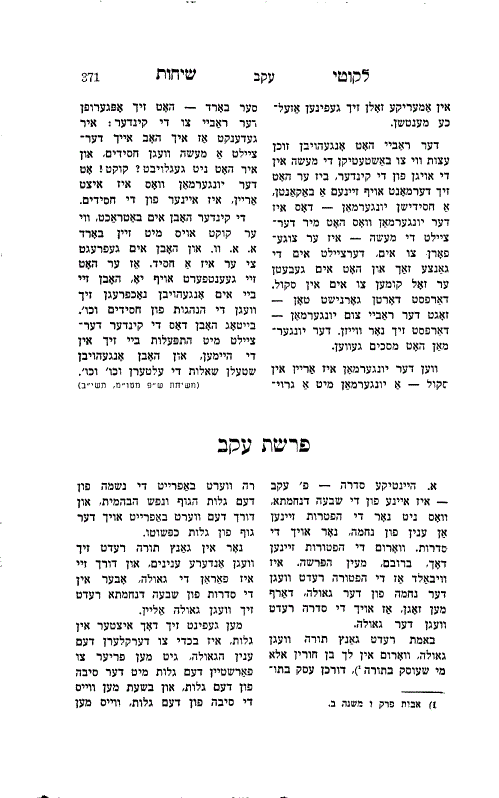
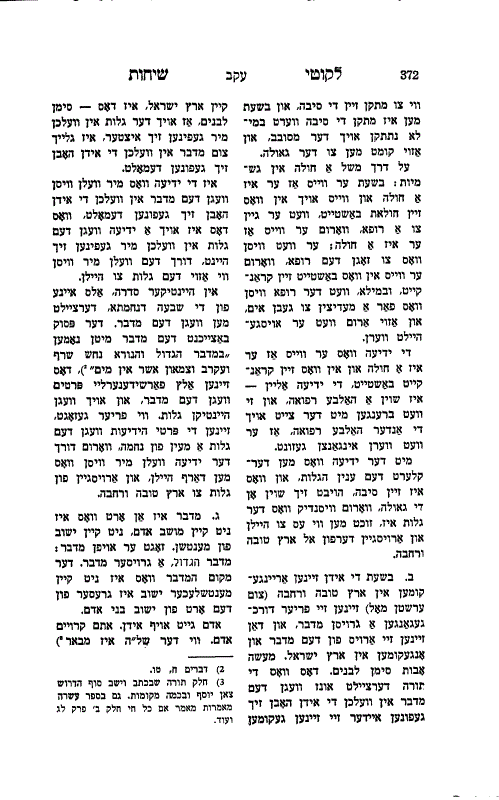
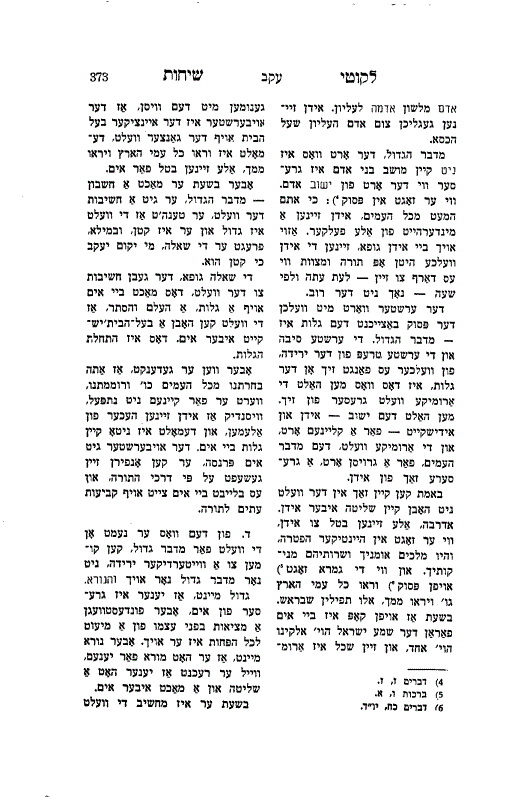
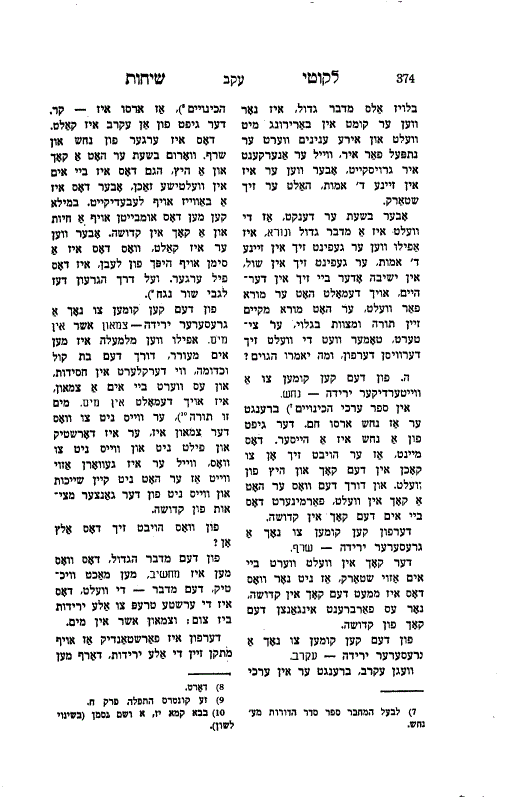
Knowing the illness is half of the cure, and it leads a person to find the second half of the cure as well. The beginning of the descent into exile is “the great wilderness”—when a person thinks that the wilderness is greater than he is.
Parshas Eikev is connected with the Seven Weeks of Consolation. Knowing the illness is half of the cure, and it brings a person to find the second half of the cure as well.
Exile is the illness, and in our parshah the nature of exile is explained. The wilderness—“where no man dwelled”—refers to exile.
The beginning of the descent into exile is “the great wilderness”: a person considers the wilderness greater than himself. He does not sense the unique greatness of the Jewish people, concerning whom we say, “You have chosen us from among all the nations.”
Lower than this is “the great and fearful wilderness.” “Fearful” means that even when he is within his own four cubits—in the synagogue and the beis midrash—he is still afraid of the wilderness.
From this he descends to “a snake, a fiery serpent, a scorpion, and thirst, where there was no water.”
“A snake” means that he possesses warmth and enthusiasm for matters of this world. This is not yet the lowest level, because he can transform his worldly warmth into warmth and enthusiasm for matters of holiness.
“A fiery serpent” means that all his affairs are characterized by coldness.
“And thirst, where there was no water” means that even when an awakening comes to him from Above, he does not recognize that his thirst is truly a thirst for water—and “water refers only to Torah.”