
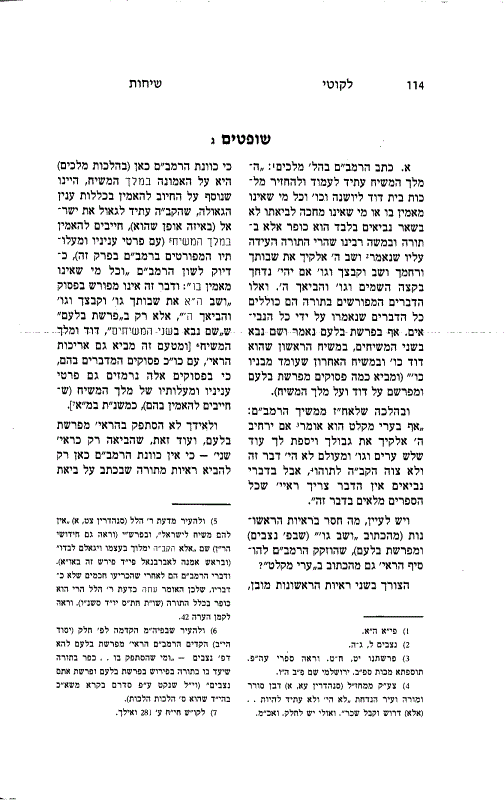

The Rambam writes in Hilchos Melachim, chapter 11:
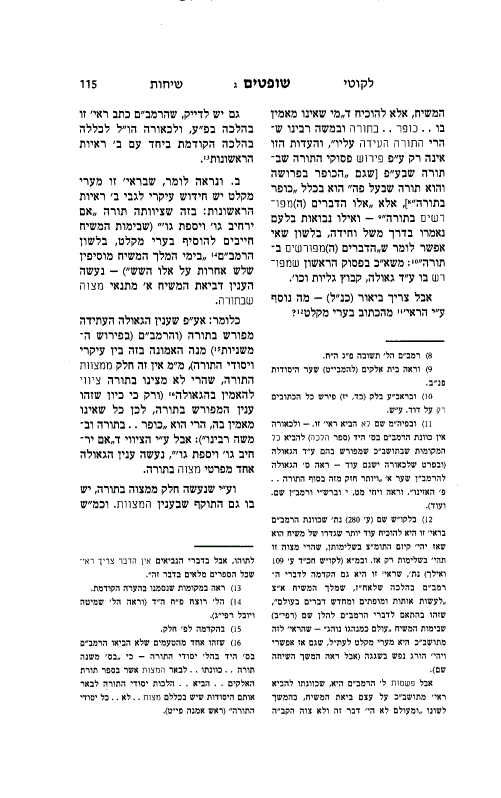
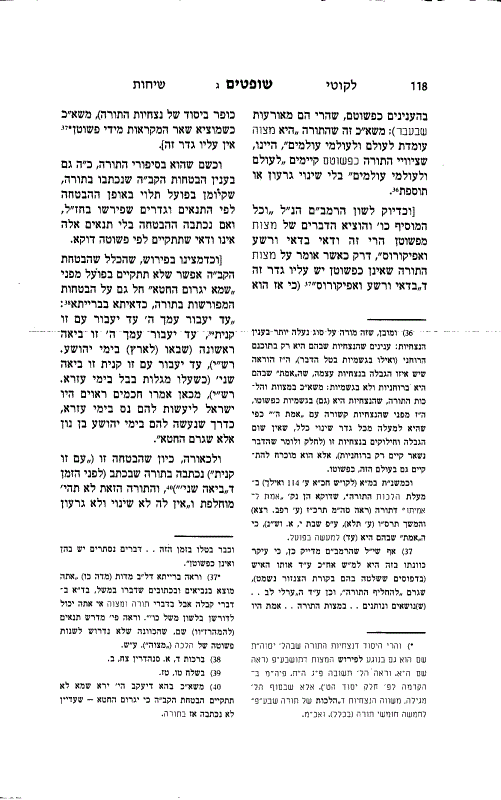
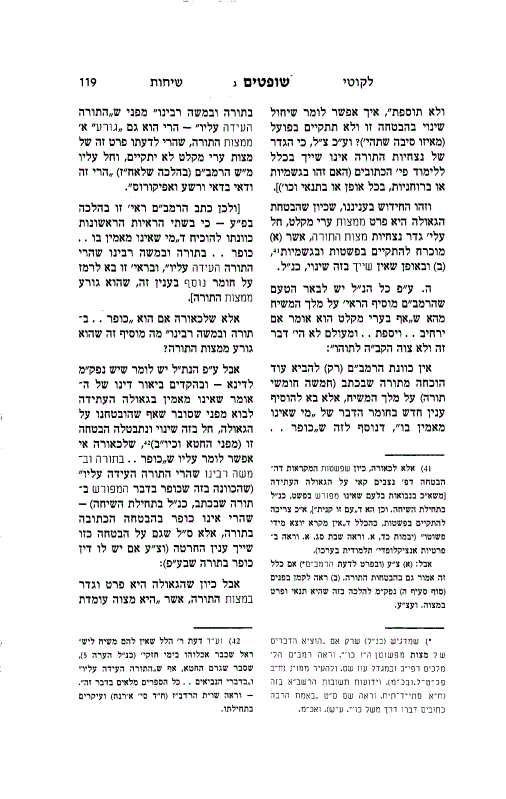
“The King Mashiach will arise… Whoever does not believe in him, or does not await his coming, denies not only the other prophets, but also the Torah and Moshe Rabbeinu, for the Torah itself testifies concerning him, as it is stated: ‘Hashem your G‑d will return your captivity…’ In the passage of Bilam as well, it is stated, and there he prophesied concerning the two Mashiachs…”
In the following halachah the Rambam adds:
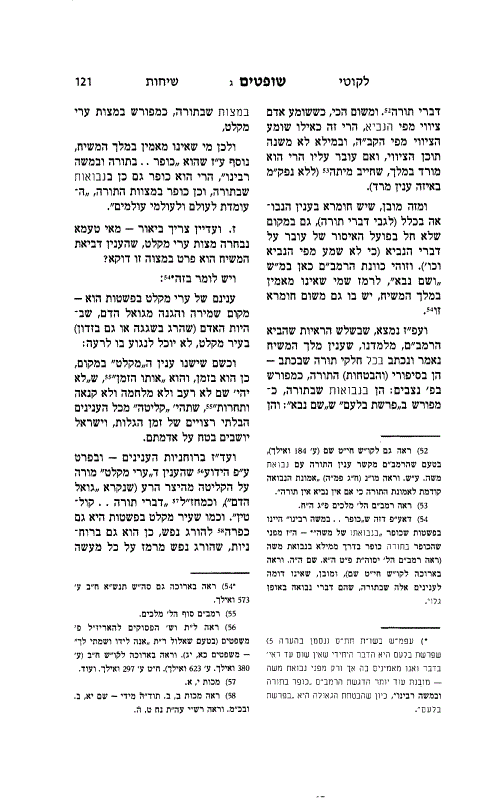
“Also regarding the cities of refuge it states: ‘If Hashem your G‑d will expand your boundary… you shall add three more cities…’ This has never yet occurred, and the Holy One, blessed be He, did not command it in vain.”
The explanation is as follows:
In the first halachah, the Rambam brings two proofs because the first verse, “Hashem your G‑d will return your captivity,” does not prove that the Redemption will take place specifically through the King Mashiach.
It could be understood that Hashem Himself will bring about the Redemption without it necessarily taking place through Mashiach.
The Rambam therefore adds the proof from the prophecy of Bilam, concerning which he says, “There he prophesied concerning the two Mashiachs.” This establishes that the future Redemption will take place through Mashiach.
Nevertheless, the Rambam cannot rely solely on the proof from Bilam.
The prophecy of Bilam is expressed in the form of metaphor and riddle, whereas the verse “Hashem your G‑d will return your captivity” states the future Redemption explicitly.
Therefore, one who denies the Redemption described there denies an explicit statement of the Torah itself.
In the following halachah, the Rambam adds a further point.
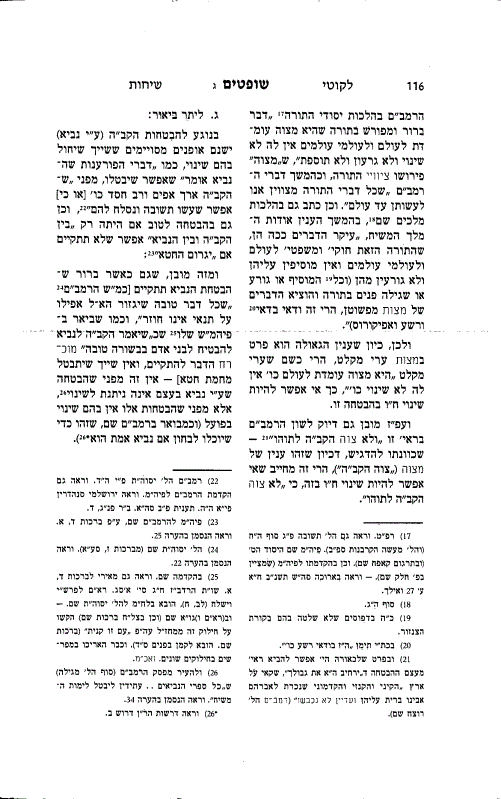
Not only is the coming of Mashiach written in the Torah; it is also incorporated into an actual mitzvah of the Torah, as he writes:
“Also regarding the cities of refuge it states…”
This teaches that the coming of Mashiach is part of the fulfillment of a Torah commandment and therefore possesses the absolute permanence of the mitzvos.
Although the Torah as a whole is eternal, the eternity of certain parts of Torah can be expressed on a spiritual level, as can be seen regarding various narratives in the Torah.
The eternity of the mitzvos, however, means their literal and practical permanence, as the Rambam states:
“This Torah, its statutes and laws, will never change for all eternity.”
Thus, the future addition of the cities of refuge demonstrates that the future Redemption is not merely a promise recorded in Torah. It is required for the actual fulfillment of an eternal mitzvah.
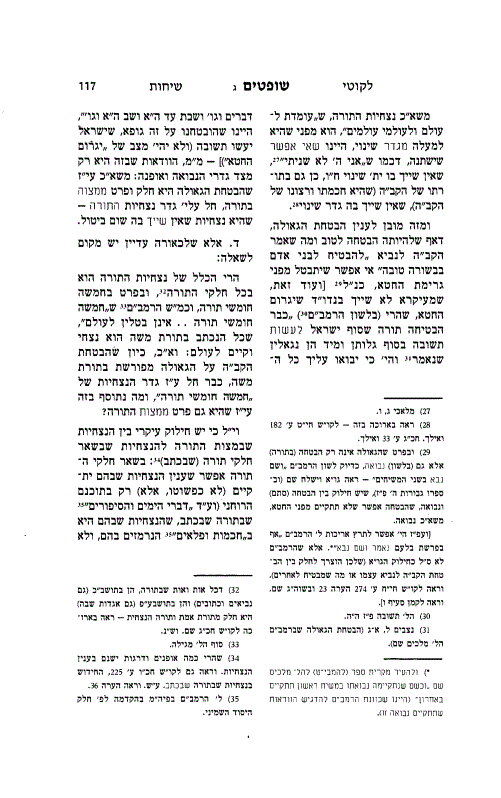
The connection between the coming of Mashiach and the mitzvah of the cities of refuge is itself significant.
Mashiach and the Redemption constitute the ultimate refuge from all the conditions and difficulties of exile.
Similarly, our Sages say that “words of Torah provide refuge.” Torah provides spiritual refuge and atonement for transgression.
The complete and ultimate refuge and atonement of the Jewish people will be attained with the coming of Mashiach, when the purpose of this spiritual “refuge” will reach its full and perfect fulfillment.