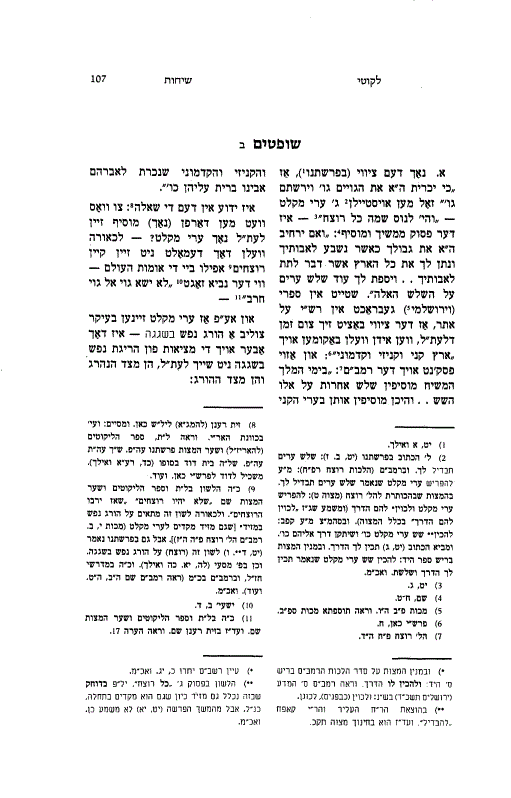
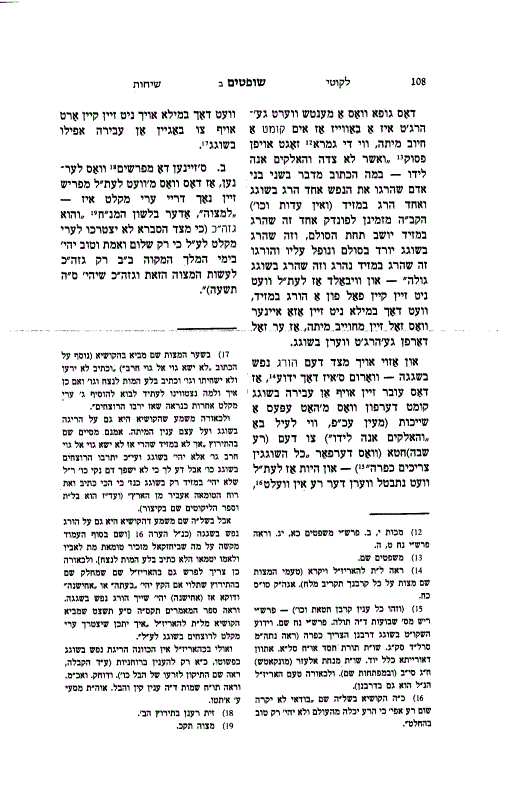
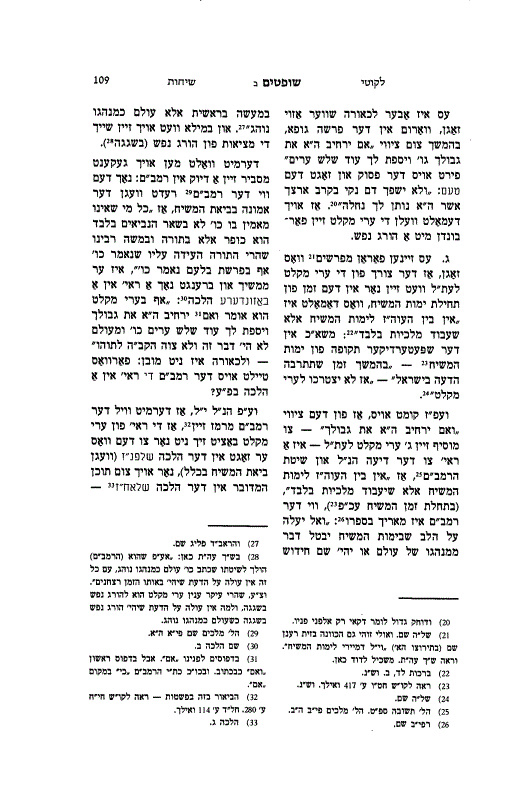
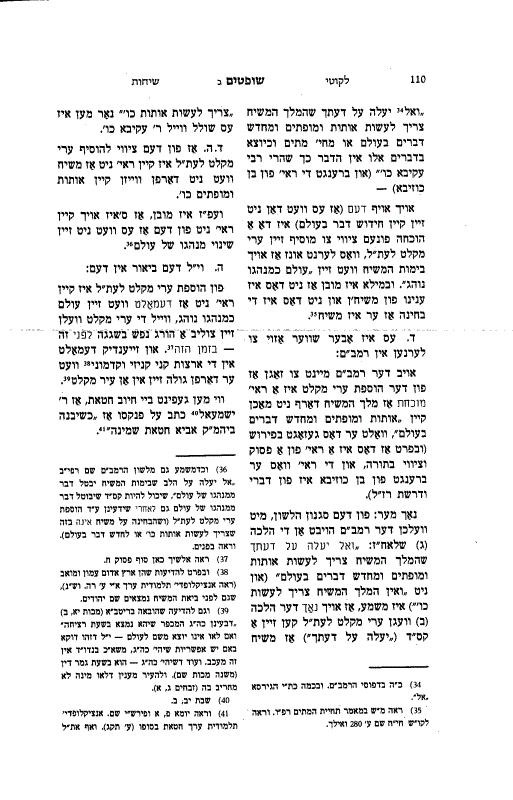
Regarding the cities of refuge, our parsha states (Devarim 19:1ff.): “And if Hashem your G‑d expands your boundary… you shall add three more cities for yourself, in addition to these three.”
This requires explanation: Why will cities of refuge be necessary in the Future Era?
Some explain that this serves as a proof for the view cited by the Rambam that, at least in the first period of the Messianic Era, “there will be no difference between this world and the days of Mashiach except subjugation to the kingdoms.”
According to this explanation, this is also why the Rambam mentions the future addition of cities of refuge in a separate halachah—not merely as a continuation of the previous halachah discussing the general coming of Mashiach, but as an introduction to the following halachah, in which he explains that “one should not imagine that the King Mashiach must perform signs and wonders… for Rabbi Akiva…” and so forth.
However, it is difficult to explain the Rambam in this manner. Even after mentioning the future cities of refuge, the Rambam still writes, “And one should not imagine…” This indicates that the law of the cities of refuge itself is not a conclusive proof that the natural order of the world will remain unchanged.
The explanation is as follows:
The cities of refuge in the Future Era will be needed for those who killed unintentionally during the present era.
This is similar to Rabbi Yishmael’s statement: “When the Beis HaMikdash is rebuilt, I will bring a fat sin-offering.” In other words, an obligation created in the present era can become practically applicable when the conditions for fulfilling it are restored in the future.
One might still ask: the reason for the cities of refuge is “lest the heart of the blood avenger become inflamed.” Seemingly, in the Future Era, when jealousy and hatred will no longer exist, there should be no concern that “his heart will become inflamed.”
The answer is that the institution of the cities of refuge is not merely an instance of the Torah accommodating the evil inclination.
Rather, there is a mitzvah incumbent upon the closest blood relative to kill the unintentional murderer under the circumstances defined by Torah.
The Torah states: “The land will not be atoned for the blood that was shed in it except through the blood of the one who shed it.”
The Torah established that when there are witnesses and proper warning, it is a mitzvah upon Beis Din to execute the murderer. In other circumstances, the blood avenger is charged with killing the murderer.
Accordingly, the concept of “his heart will become inflamed” is not merely a natural emotional reaction. It is also connected with the obligation established by Torah.
Therefore, this concept will remain relevant even in the Future Era, and cities of refuge will still be necessary.
May it be Hashem’s will that through the spiritual cities of refuge—“words of Torah provide refuge”—and especially during the month of Elul, whose letters form an acronym for “Inah leyado vesamti lecha”—“He caused it to come to his hand, and I will establish a place for you”—we merit the fulfillment of the promise:
“Hashem your G‑d will expand your boundary… and you shall add three more cities for yourself.”