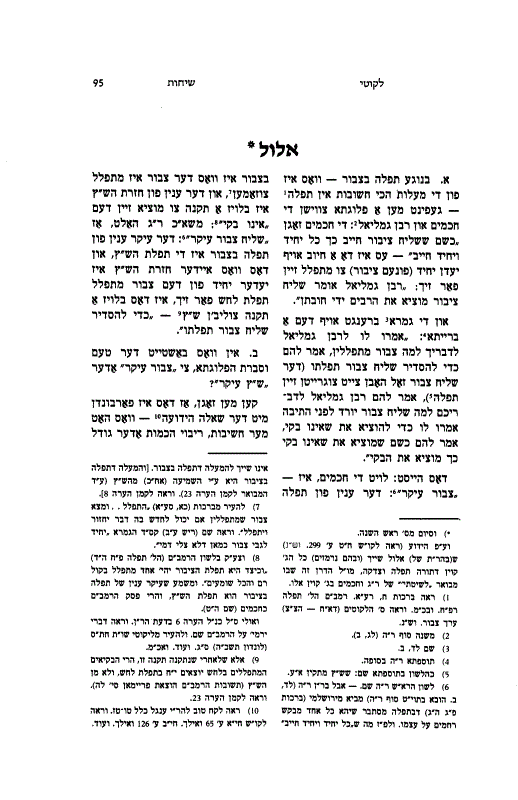
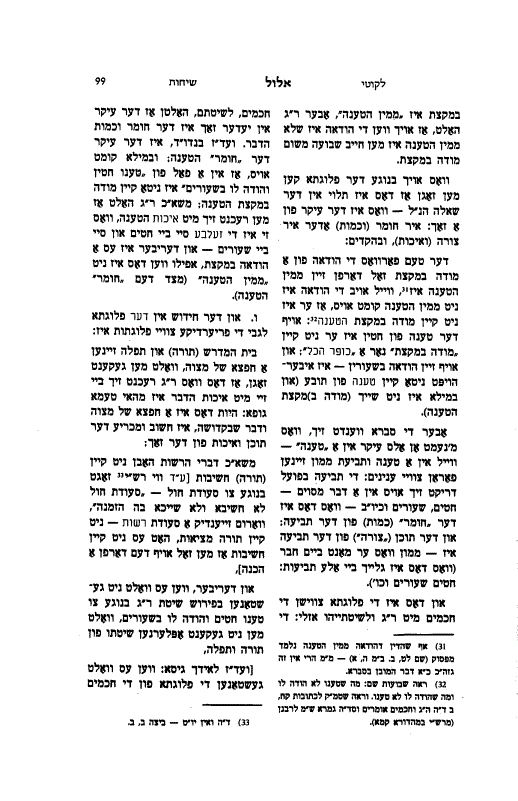
At the conclusion of Maseches Rosh Hashanah (33b), there is a dispute regarding prayer.
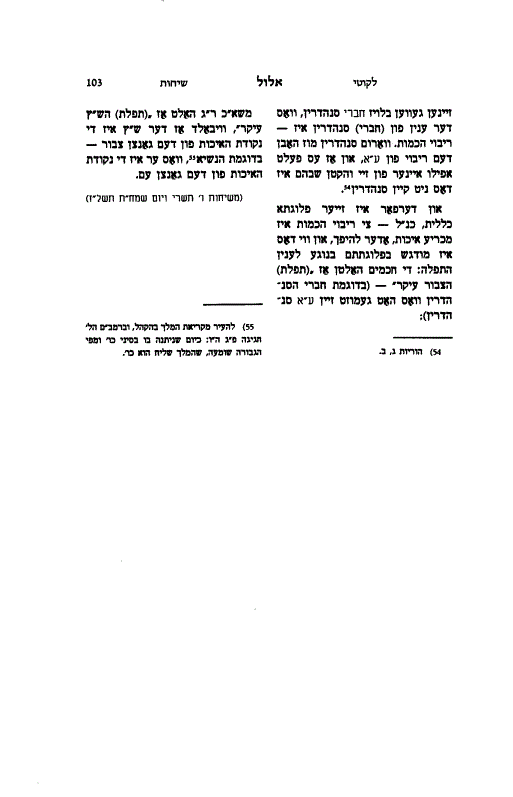
The Sages say: “Just as the shaliach tzibbur is obligated, so too every individual is obligated.” According to them, the prayer of the shaliach tzibbur serves only “to discharge the obligation of one who is not proficient.”
Rabban Gamliel, however, says: “The shaliach tzibbur fulfills the obligation of the public.” According to his view, the purpose of each individual’s prayer is merely “so that the shaliach tzibbur may arrange his prayer properly.”
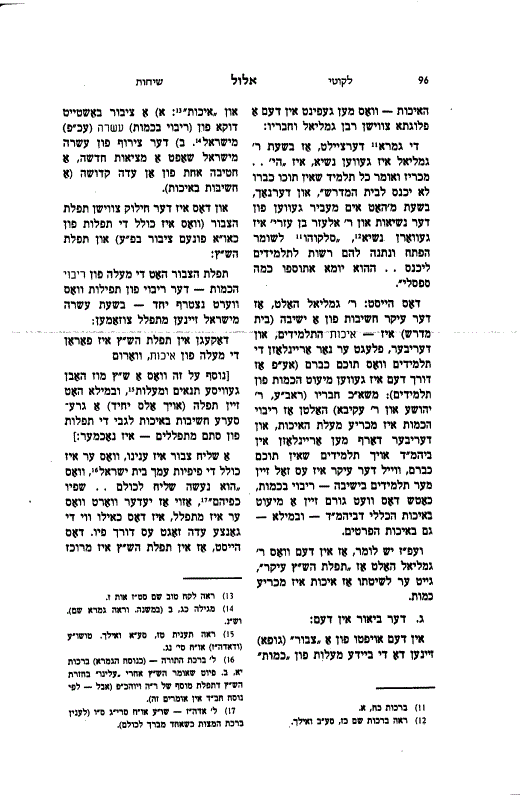
It may be suggested that their dispute reflects a broader question: which is decisive—quantity or quality?
Rabban Gamliel maintains that quality is decisive. We see this also from his statement in Berachos (28a): “Any student whose inside is not like his outside may not enter the study hall.” He therefore holds that the primary prayer is that of the shaliach tzibbur, whose prayer is of an entirely different quality, since he includes the entire congregation within his prayer.
The Sages, by contrast, removed the doorkeeper of the study hall because they maintained that quantity is decisive. Accordingly, they hold that the prayer of the congregation—the large number of individuals praying—is primary.
Why is it necessary for this disagreement to be expressed both regarding prayer and regarding admission of students to the study hall?
Had we known only that Rabban Gamliel gives preference to quality regarding the study hall, we might have thought that he does so specifically there, because Torah study involves understanding and comprehension, where quality is especially significant.
Prayer, however, is different. When the congregation prays together, there is not only the advantage of quantity—the large number of people—but also an element of quality, since many Jews are praying together. Although this quality is not equal to the unique quality of the shaliach tzibbur’s prayer, we might nevertheless have thought that even Rabban Gamliel would agree that communal prayer is preferable.
Conversely, had we known only their dispute regarding prayer, we would not necessarily know Rabban Gamliel’s view regarding the study hall. Torah is acquired through “the sharpening of students,” and our Sages say, “From my students, more than from all of them.” Thus, an increased number of students adds to the acquisition and clarification of Torah. We might therefore have thought that in Torah study Rabban Gamliel would also favor quantity.
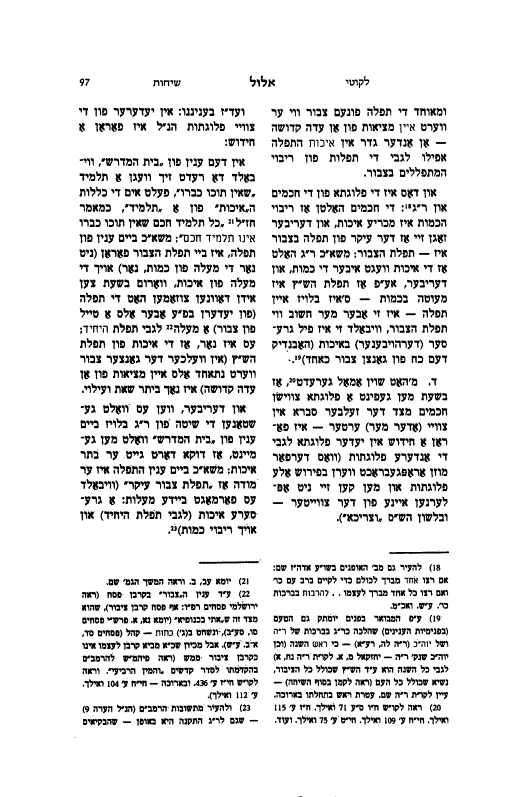
The question of whether quantity or quality is decisive parallels the question of whether matter or form is primary—quantity corresponding to matter, and quality to form.
Here too, Rabban Gamliel and the Sages follow their respective approaches.
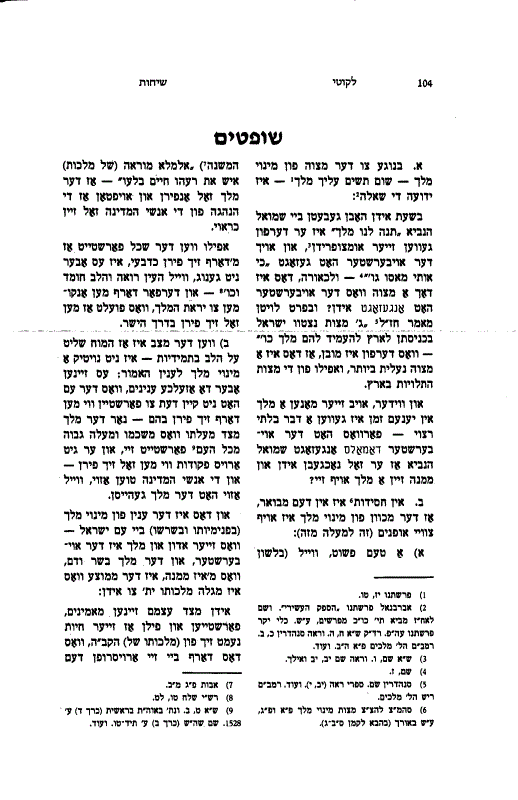
The Sages maintain that if a person is sued for wheat and admits owing barley, he is exempt, because his admission is not of the same kind as the claim. When one looks at the material substance, wheat and barley are two different species.
Rabban Gamliel, however, holds that he is liable. From the inner perspective—the form and quality of the claim—the real claim is not specifically about wheat, but about monetary value. Wheat and barley are therefore alike, because inwardly they are both of the same category: money.
It is also necessary for their dispute to be stated in this case.
Rabban Gamliel’s preference for quality in Torah and prayer might have been understood as applying only to matters of holiness, where quality is inherently important. We would still not know his view regarding ordinary material matters, where perhaps quality is not as significant.
Conversely, had the disagreement been stated only regarding partial admission in a monetary claim, we would not know the Sages’ position in matters of Torah and prayer.
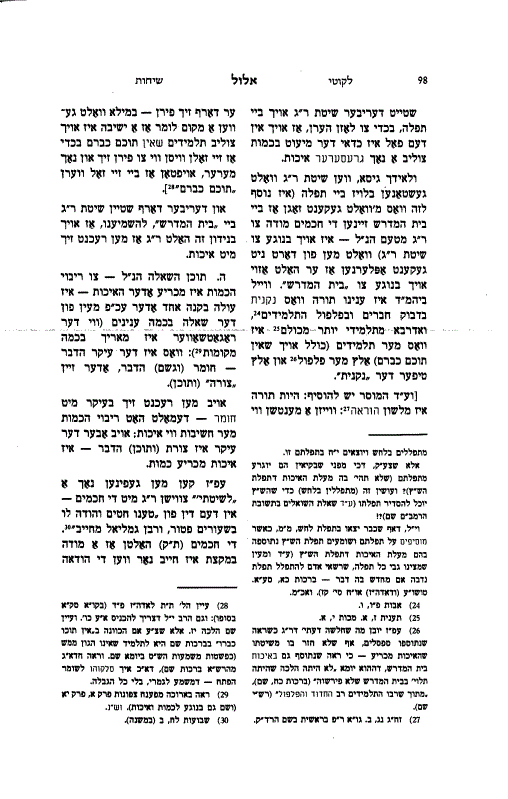
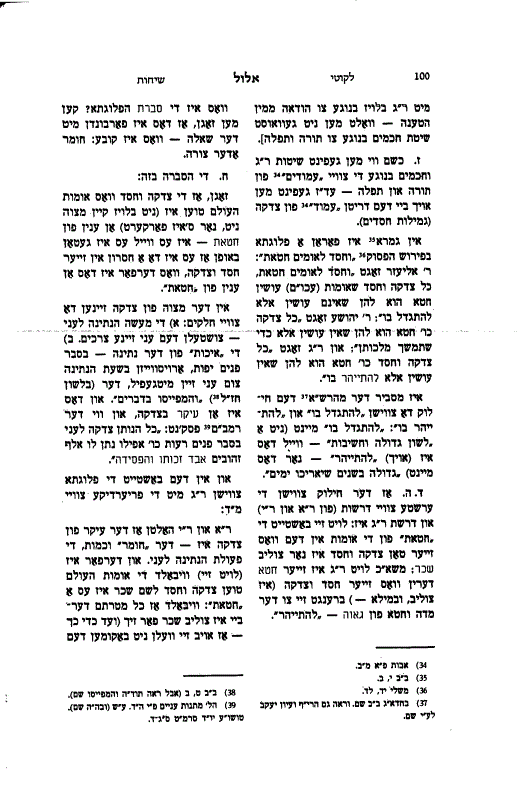
A similar dispute can be found regarding tzedakah, in addition to Torah and prayer discussed above.
Regarding the verse, “The kindness of the nations is sin,” Rabbi Eliezer explains that their charity is considered sinful because “they do it only in order to become great through it.” Rabbi Yehoshua says it is because they give “only so that their kingdom should continue.”
According to these views, the deficiency concerns the quantity of the charity. Since they give according to their own personal interests and desires, the amount that they give is determined by what suits them rather than by the needs of the poor person.
Rabban Gamliel, however, explains that “the kindness of the nations is sin” because “they do it only in order to glorify themselves.”
This is a deficiency in the quality of the charity. It relates to the concept of “one who comforts and reassures the poor person.” Not only do they fail to comfort the recipient; the very act of giving causes the giver to become arrogant. Thus, the defect lies in the quality and character of the act of charity itself.
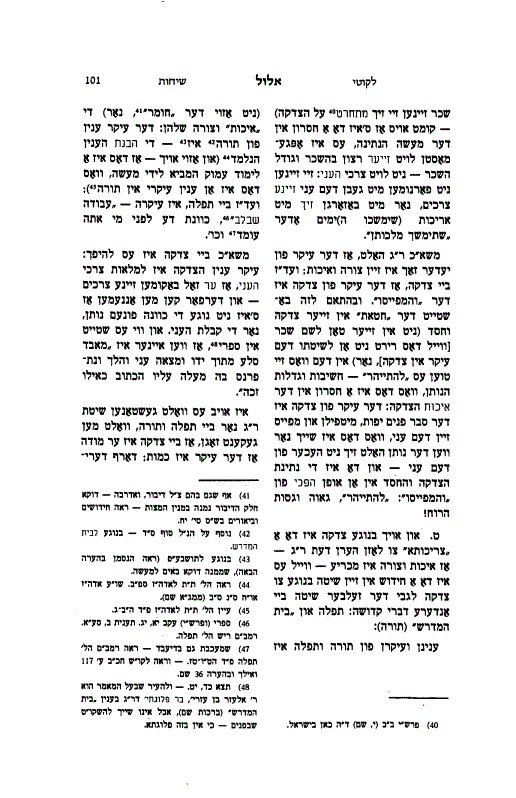
It is also necessary to state their disagreement regarding charity.
Torah and prayer are inherently matters in which quality is central—understanding in Torah and intention in prayer. Charity, however, is different, because its primary purpose is that the poor person actually receive what he needs. One might therefore have thought that even Rabban Gamliel would agree that in charity quantity is decisive.
Conversely, had the disagreement been taught only regarding charity, one might have thought that Rabban Gamliel prefers quality only when it does not reduce quantity. We would not know that he maintains this even in the cases of the study hall and the shaliach tzibbur, where emphasizing quality actually reduces quantity—fewer students are admitted to the study hall, and the prayer of the single shaliach tzibbur takes precedence over the prayers of the many individuals.
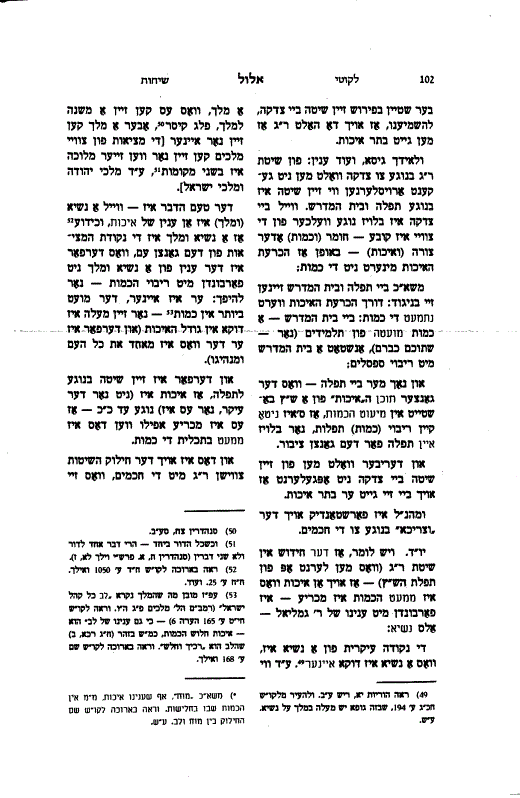
The reason Rabban Gamliel maintains that quality is superior—even where greater quality comes at the expense of quantity—is because Rabban Gamliel was the Nasi.
The defining feature of a Nasi is that he is one individual, like a king. In quantity he is only one person, but in quality he represents an entirely different level.
The Sages, by contrast, were members of the Sanhedrin. The defining feature of the Sanhedrin is specifically the required multiplicity of its members—seventy-one judges.
Therefore, the Sages maintain that quantity is decisive, while Rabban Gamliel maintains that quality is decisive.