
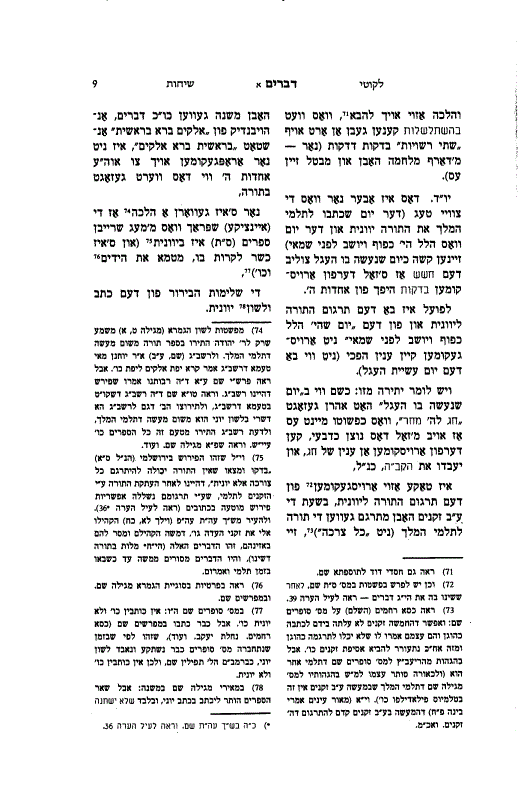
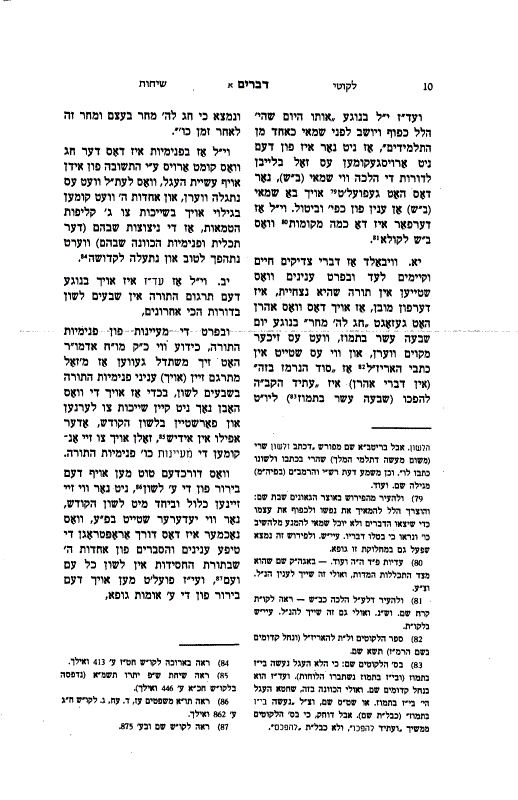
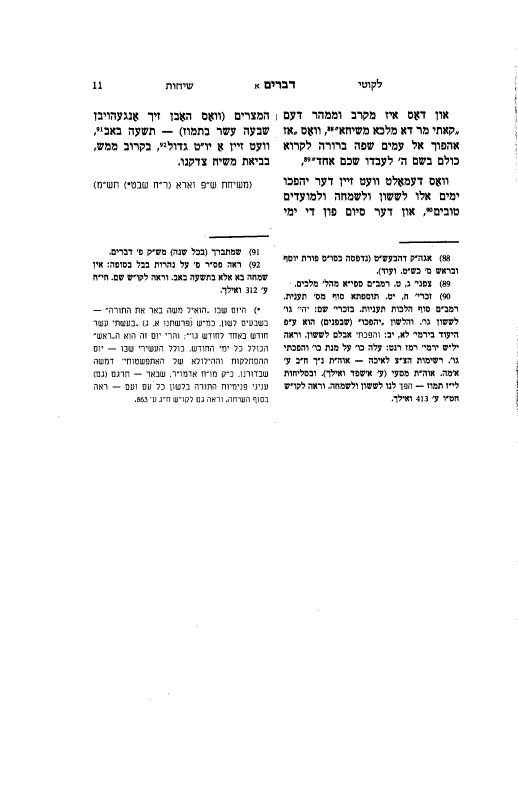
The expression “like the day on which the Calf was made”—when Aharon said, “A festival for Hashem tomorrow”—means that there was still the possibility that something undesirable might emerge from it. This is similar to the translation of the Torah into Greek and to the occasion when Hillel was submissive before Shammai.
In practice, however, these matters ultimately produced a positive result. Permission was granted to write the Torah in Greek, and through Beis Hillel sitting humbly before Shammai, they influenced Shammai.
On the verse, “Explain it well,” Rashi comments:
“He explained it to them in seventy languages.”
Yet Maseches Sofrim relates:
“It once happened that five elders wrote the Torah in Greek for King Ptolemy, and that day was as difficult for the Jewish people as the day on which the Calf was made.”
This requires explanation. Moshe also translated the Torah. How, then, could translating it be considered something undesirable? Moreover, how can the translation of the Torah into Greek be compared to the gravest matter—the making of the Golden Calf?
We find a similar expression in Maseches Shabbos:
“On that day Hillel was submissive before Shammai, and it was as difficult for the Jewish people as the day on which the Calf was made.”
Here too, the same question arises: How can this be compared to the making of the Calf?
The explanation lies in the precise wording: “like the day on which the Calf was made.”
On that day, there was still the possibility that something positive might result, as Aharon said, “A festival for Hashem tomorrow.” It was only on the following day that the people sinned by worshiping the Calf.
Thus, the expression “the day on which the Calf was made” means a situation in which there existed the possibility that something undesirable might develop.
This was similar to the translation of the Torah into Greek. Without the carefully introduced changes, an error could have developed in the understanding of the verses.
Likewise, when Hillel was submissive before Shammai, there was concern that the halachah might be established according to Beis Shammai, although this concern did not ultimately materialize.
The root of the sin of the Golden Calf was that the people wanted there to be an entity within which Hashem would dwell, similar to Moshe. Since this was not in accordance with Hashem’s command, however, it became a sin and an intermediary that separated them from Hashem.
Therefore, “the day on which the Calf was made” was especially grave because the Calf represented an independent existence.
A comparable danger existed in translating the Torah into Greek. This could have led to the mistaken reading, “Elokim created Bereishis,” implying two separate powers.
Similarly, had the halachah been established according to Shammai, it would have reflected the same subtle error. Beis Shammai are stringent because of the attribute of judgment: when they do not see the possibility of drawing holiness into a particular object or situation, they reject it. On a subtle level, this resembles the idea of two authorities—the assumption that something can exist separately from G‑dliness.
In practice, however, not only did these two matters fail to produce an undesirable result, but they actually brought about something positive.
The Torah was permitted to be written in Greek. Likewise, through Beis Hillel sitting humbly before Shammai, they influenced Shammai. This is why there are also certain lenient rulings of Beis Shammai.