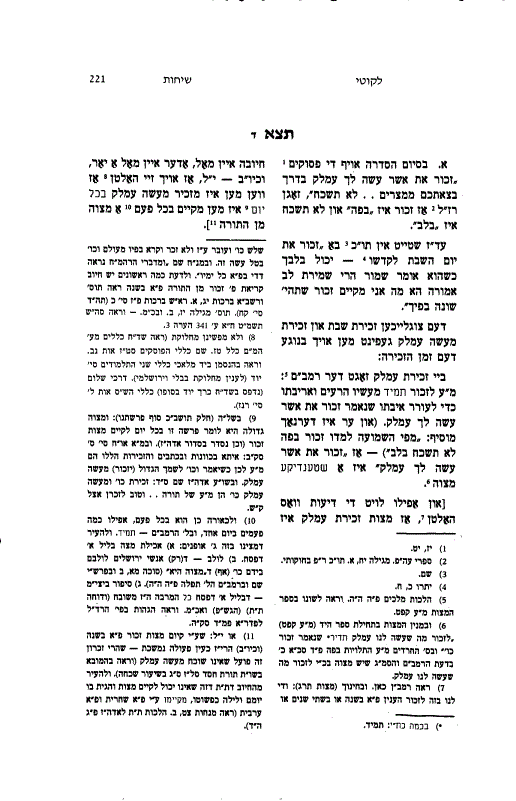
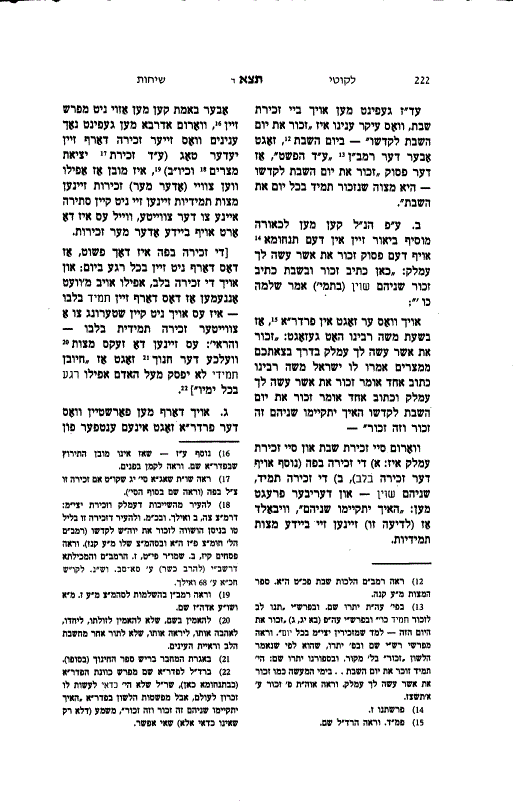
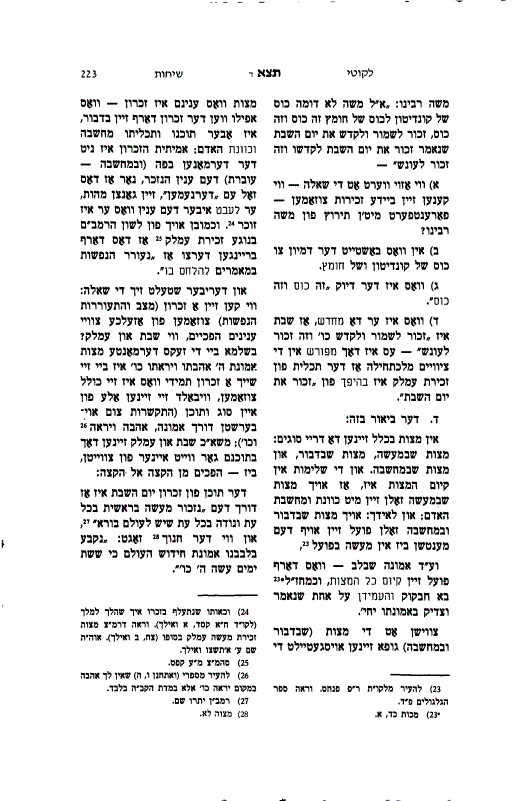
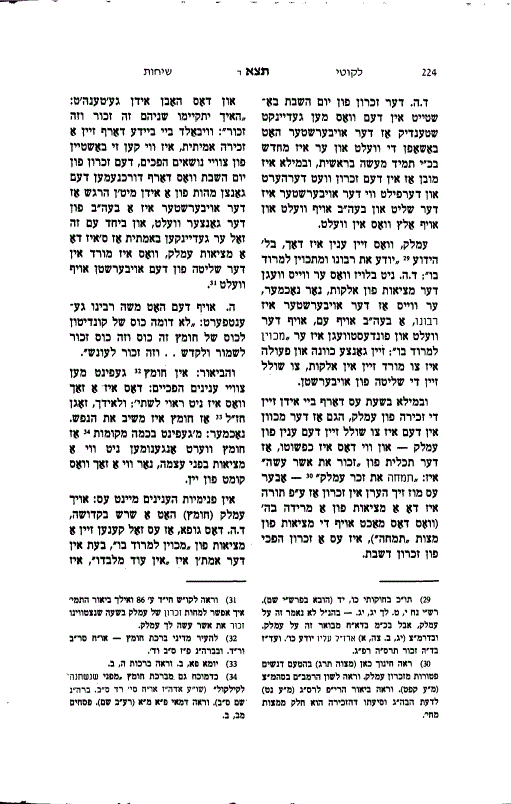
Regarding the remembrance of Amalek it is stated: “Remember… do not forget,” and our Sages expounded: “Remember with your mouth; do not forget in your heart.” Similarly, regarding remembering Shabbos, shamor is in the heart and zachor is with the mouth.
In Pirkei DeRabbi Eliezer it is stated:
The Jewish people said to Moshe Rabbeinu: One verse says, “Remember… Amalek,” and another verse says, “Remember the Shabbos day to sanctify it.” How can both be fulfilled?
Moshe answered them: A cup of kunditon is not comparable to a cup of vinegar. This is a cup and that is a cup: this “remember” is to guard and sanctify, and this “remember” is for punishment.
The explanation is as follows:
Although there are several constant mitzvos, they can all be fulfilled simultaneously because they share the same content — attachment to the Holy One, blessed be He, through faith, love, fear, and so forth.
The Jewish people, however, argued to Moshe that the two remembrances — Shabbos and Amalek — are complete opposites. Shabbos indicates the creation of the world and that the Holy One, blessed be He, is the Master of the world, whereas Amalek represents one who “knows his Master and deliberately intends to rebel against Him.” How, then, can both be fulfilled simultaneously?
To this Moshe answered that vinegar has two aspects: first, it is not fit for drinking; yet, on the other hand, our Sages said that vinegar restores the soul.
This means that the very fact that Amalek is able to rebel against Hashem is itself a revelation of the power of the Holy One, blessed be He, Who is omnipotent. However, the revelation of Amalek’s Divine source comes through Amalek’s nullification — “remember” for punishment.
This is the meaning of the fact that both Shabbos and Amalek are called a “cup”: each is a vessel for the revelation of G‑dliness.
The lesson in avodah is that even when a person is in a state of Shabbos — above the world — he must still be careful of the kelipah of Amalek, which has a root in holiness.
Conversely, even a Jew who thinks that he is in a state of Amalek must know that he can become like vinegar that restores the soul, in accordance with the advantage of light that comes from darkness.