
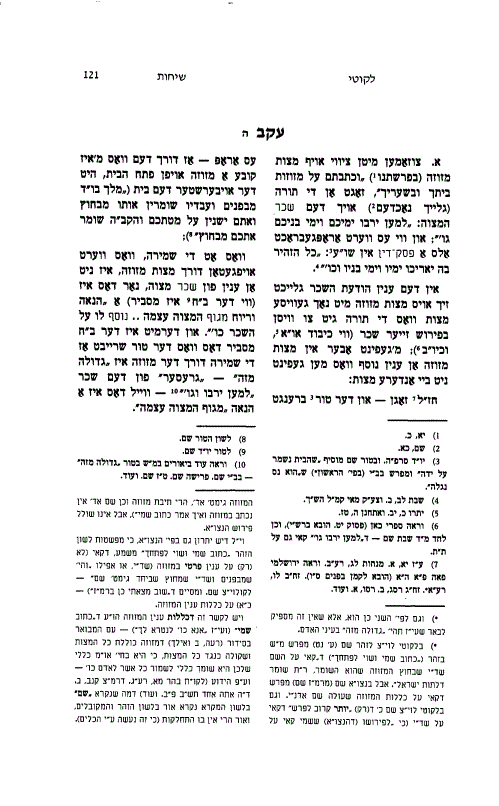
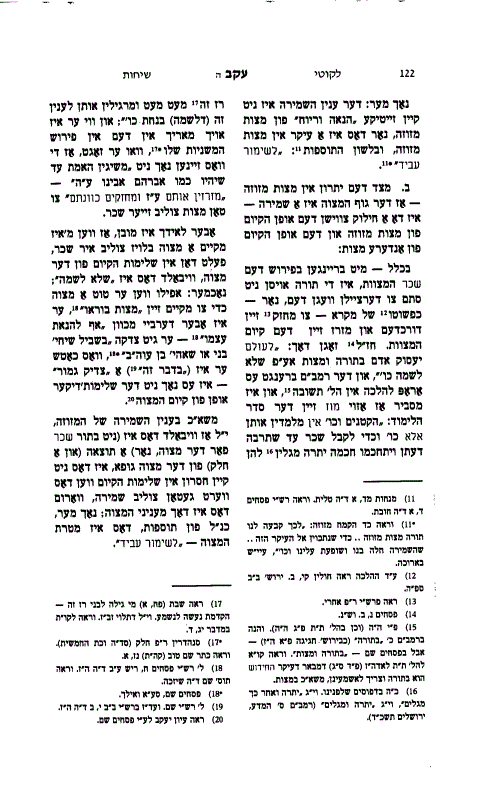
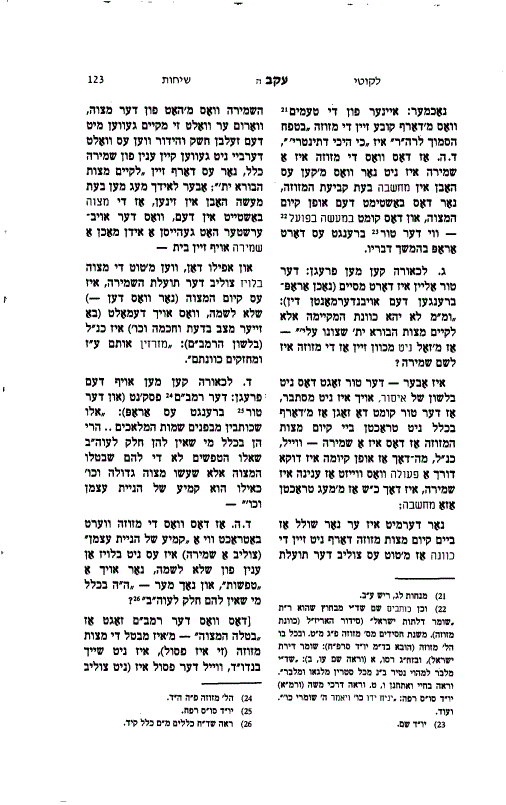
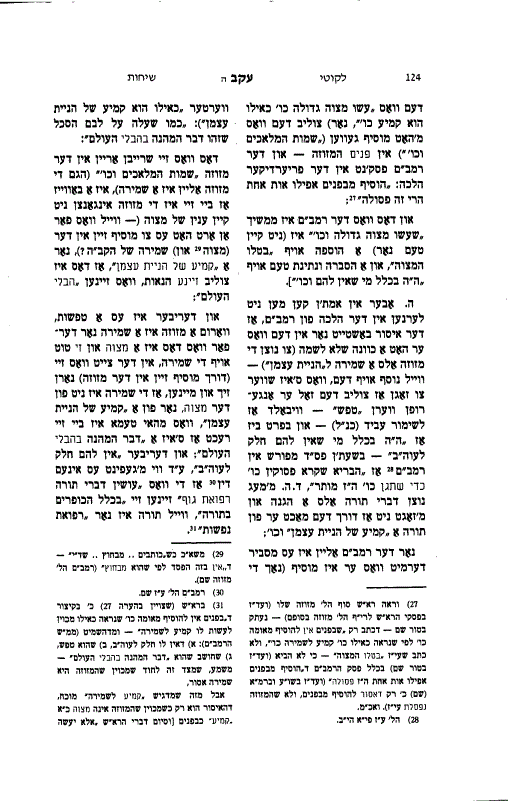
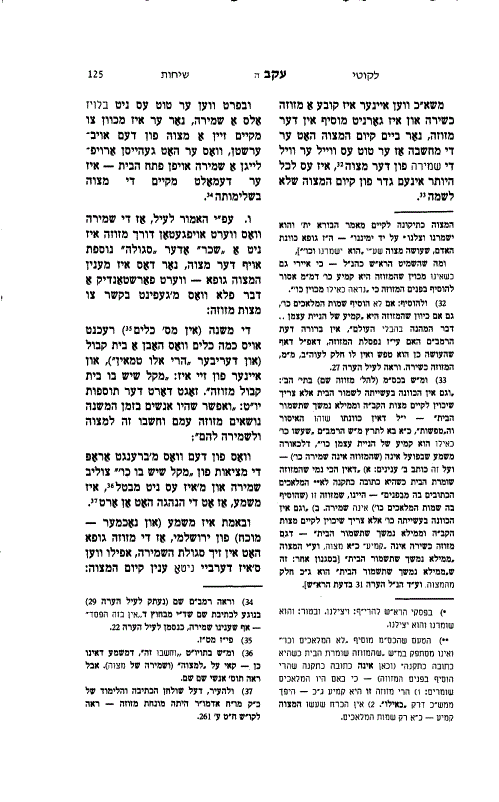
With regard to mezuzah, protection is not merely a reward, but part of the mitzvah itself. Hashem commanded us to affix a mezuzah for protection. Therefore, when a person intends, while performing the mitzvah, to receive this benefit as well, his observance is not considered shelo lishmah—performed for an ulterior motive.
Based on this, it may be said that even when a mezuzah is not affixed in its proper place, it nevertheless possesses a special capacity to provide protection, because protection is part of the essential nature of the mezuzah.
In our parshah it is written: “You shall write them upon the doorposts of your house and upon your gates, so that your days may be increased.”
The Tur states that a mezuzah brings protection to the home. In the words of the Bach: “The benefit and advantage of the mezuzah derive from the body of the mitzvah itself… in addition to the reward.”
This means that although, with regard to other mitzvos, performing a mitzvah in order to receive a reward is considered shelo lishmah, with regard to mezuzah, protection is not merely the reward for the mitzvah. Rather, it is part of the mitzvah itself. Hashem commanded us to affix a mezuzah for protection. Therefore, when a person intends, while performing the mitzvah, to receive this benefit as well, his observance is not considered shelo lishmah.
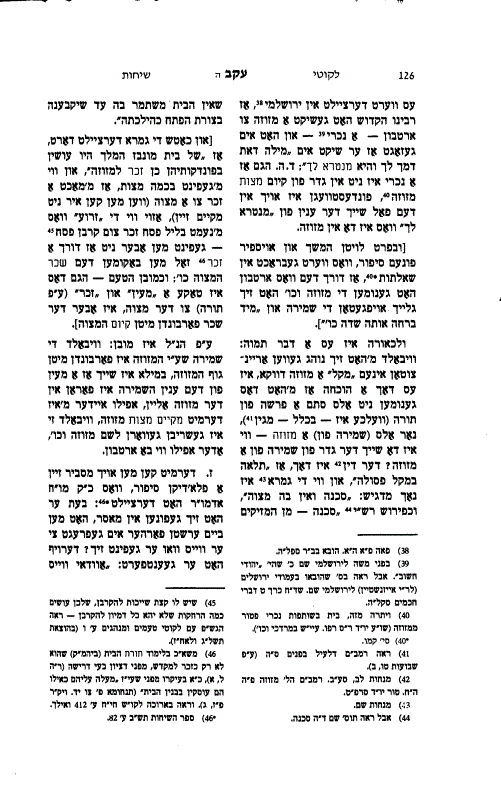
The Rambam writes:
“Those who write inside the mezuzah the names of angels and similar matters are among those who have no share in the World to Come… for they have turned a great mitzvah… into something resembling an amulet for their own benefit.”
The Rambam’s intention is that their foolishness lies in adding the names of angels. This demonstrates that they do not place their trust in the protection inherent in the mitzvah itself. Instead, they regard the mezuzah as “an amulet for their own benefit and an object that provides them with worldly vanities.”
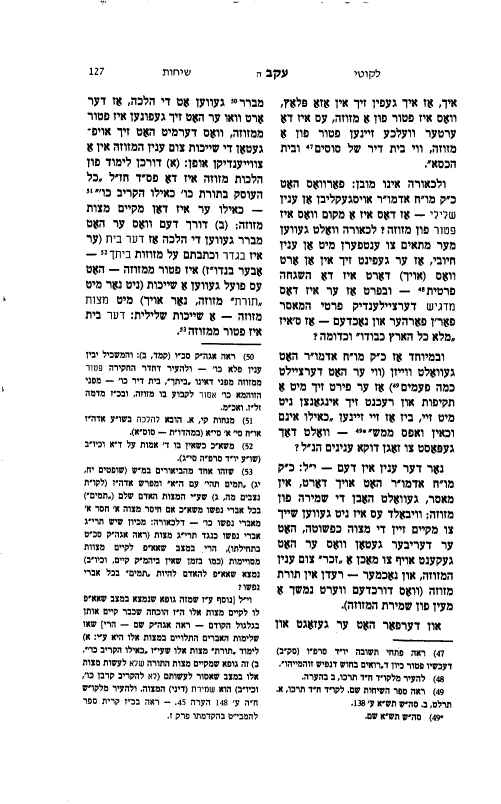
Based on the above, it may be said that even when a mezuzah is not affixed in its proper place, it nevertheless possesses a special capacity to provide protection, because protection is part of the essential nature of the mezuzah.
This is supported by the Tosafos Yom Tov’s commentary on the Mishnah’s statement concerning “a staff containing a receptacle for a mezuzah.” He writes: “It is possible that in the time of the Mishnah, people carried a mezuzah with them and considered this a mitzvah and a protection for themselves.”
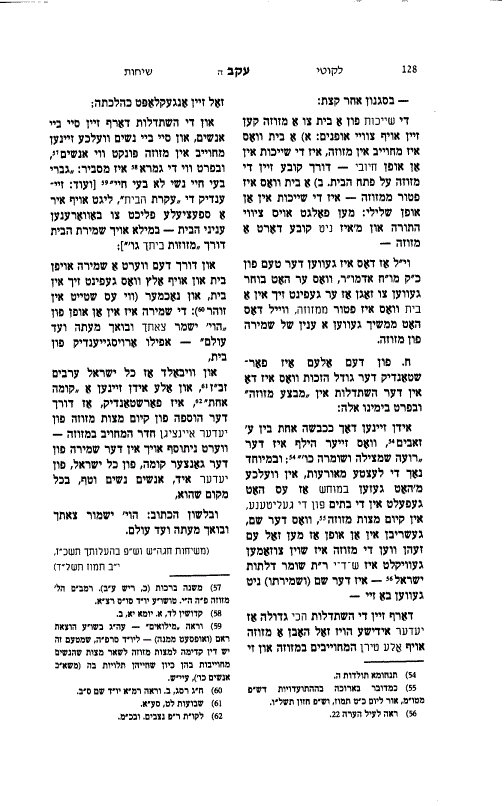
Accordingly, we can explain the account concerning my revered father-in-law, the Rebbe, while he was imprisoned. When his interrogators asked whether he knew where he was, he replied that he was in a building exempt from the obligation of mezuzah.
It may be said that he mentioned this in order to draw protection through mentioning the mezuzah. Although the building’s connection to mezuzah was expressed negatively—that it was a building exempt from mezuzah—his words nevertheless established a connection between that building and the mitzvah of mezuzah.
From this we can appreciate the great importance of exerting every effort in the Mezuzah Campaign. Through this, we merit the fulfillment of the verse: “Hashem will protect your going out and your coming in, from now and forever.”