
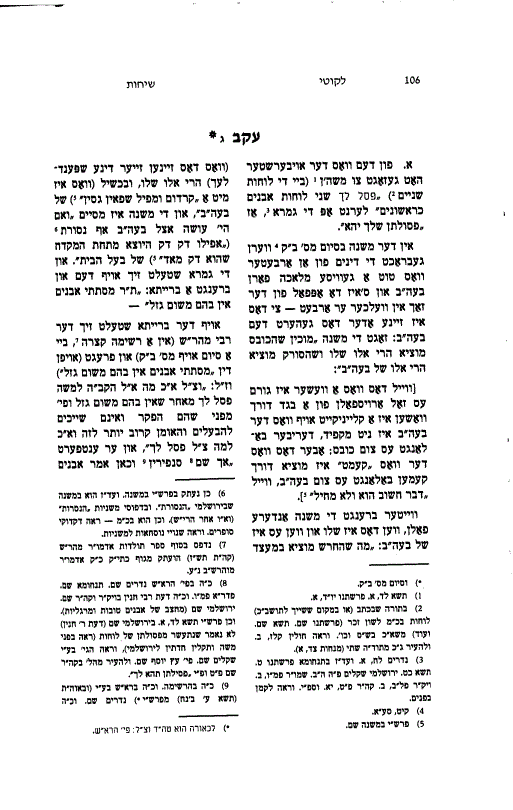
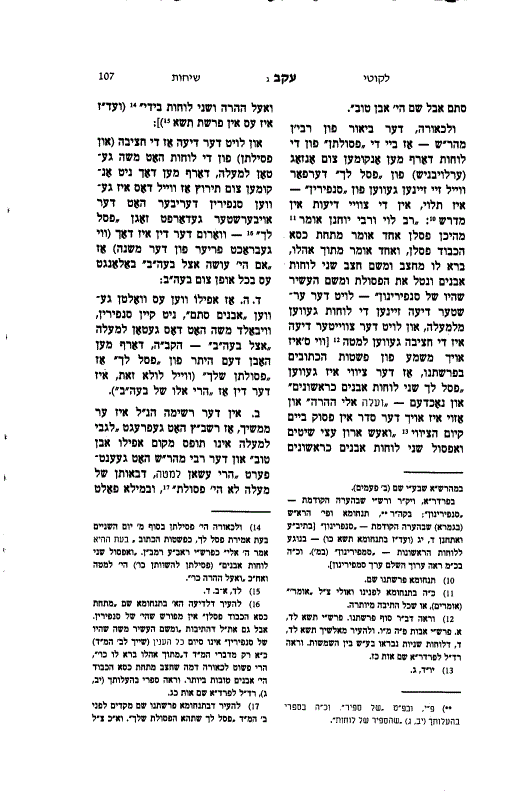
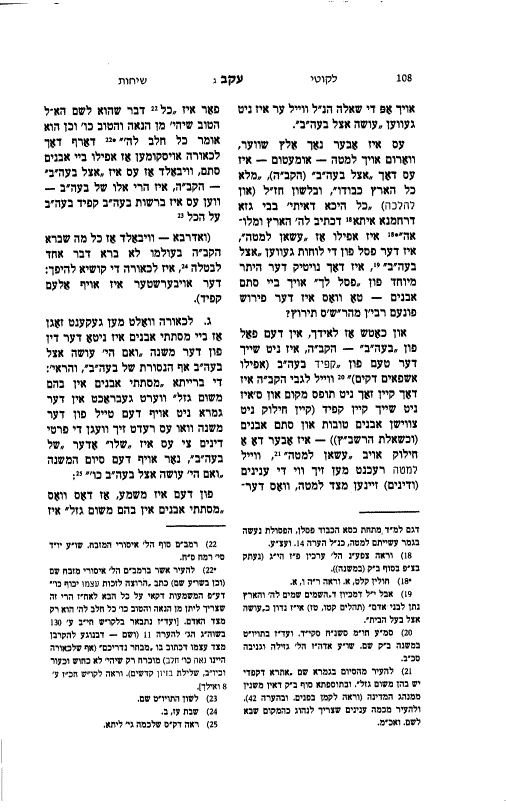
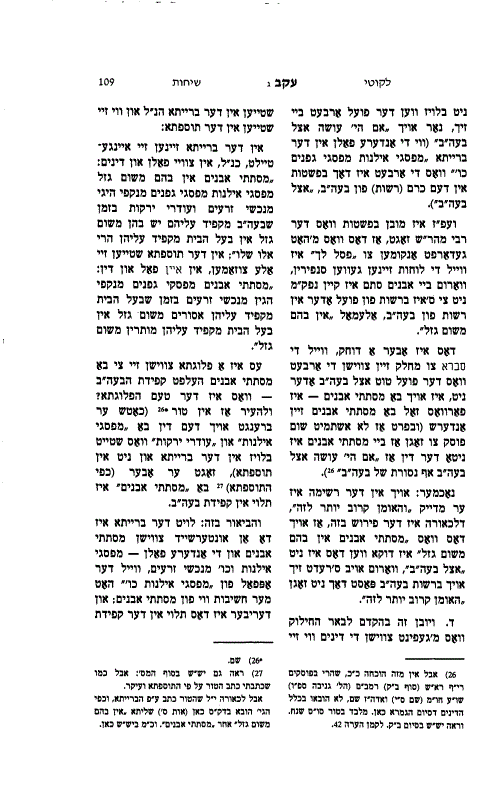
In the wilderness, the Jewish people were not involved in building with stone. The Rebbe Maharash therefore asks why a special command, “Carve for yourself,” was necessary to teach that “their fragments shall belong to you.” Stone fragments seemingly had no value at all, and taking them would not constitute theft. He answers that the Luchos were made of sapphire, and therefore even their fragments were valuable.
Regarding the verse, “Carve for yourself,” the Gemara states: “Their fragments shall belong to you.”
At the conclusion of tractate Bava Kamma it is stated: “The tufts of wool removed by a washer belong to him, while those removed by a carder belong to the owner.” A Baraisa further states: “Regarding stonecutters, the fragments do not involve theft.”
In a note by the Rebbe Maharash on this Baraisa, he asks why it was necessary to tell Moshe specifically that “their fragments shall belong to you.” After all, taking stone fragments does not constitute theft.
He answers that this was because the stones were made of sapphire, and therefore the fragments were valuable.
This can be explained by first considering the difference between the above-mentioned Baraisa and the Tosefta.
The Baraisa distinguishes between stones, whose fragments do not involve theft, and trees, vines, and similar materials, regarding which the ruling depends upon whether the owner is particular about them.
The Tosefta, however, includes stones together with trees and other materials, ruling that in every case the matter depends upon the owner’s intention.
The explanation is that the Baraisos were studied outside Rabbi Yehudah HaNasi’s study hall and were taught in Babylonia, where stones were not commonly available. Therefore, fragments from stones that had been transported there possessed no importance whatsoever.
The Tosefta, by contrast, was taught by Rabbi Chiya before Rabbi Yehudah HaNasi in Eretz Yisrael. Stones were available there and were used for construction and similar purposes. Stone fragments could therefore possess value, and their ownership depended upon the intention of the owner.
Accordingly, in the wilderness, where they were not engaged in building with stone, the Rebbe Maharash asks why a special command was necessary: “Carve for yourself”—“their fragments shall belong to you.” Stone fragments seemingly possessed no value.
He answers that the Luchos were made of sapphire, and therefore even their fragments were valuable.
An additional explanation is that a special command was necessary to establish that the fragments belonged to Moshe. Without this command, we might have assumed that the fragments belonged to the community.
The inner explanation is as follows:
The Gemara states that both the fragments and the analytical depth of Torah were given to Moshe. The connection between them is that the second Luchos, which were not given completely from Above, allude to Torah as it descends below.
It is specifically below, because of concealment and obscurity, that the concept of toil in Torah was introduced. This toil is represented by the “fragments.”
Through such toil, however, one reaches the very essence of Torah, which is higher than Torah as it was given through the first Luchos. Moshe generously shared this gift and gave it to the Jewish people.