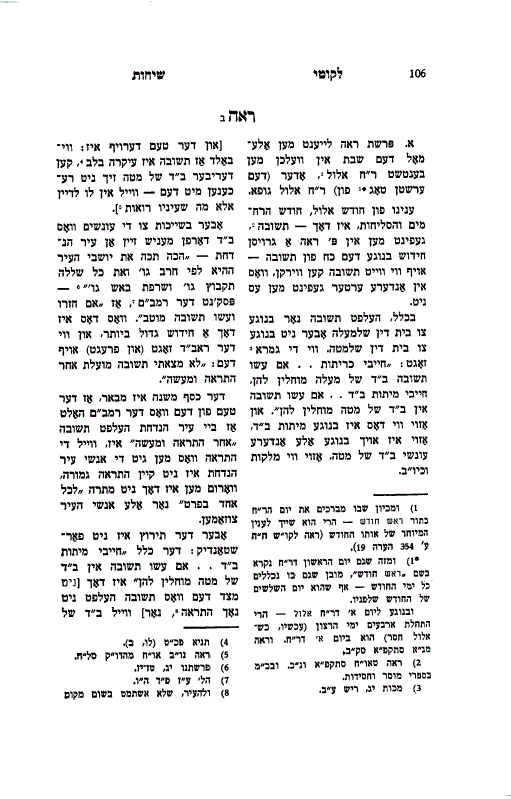
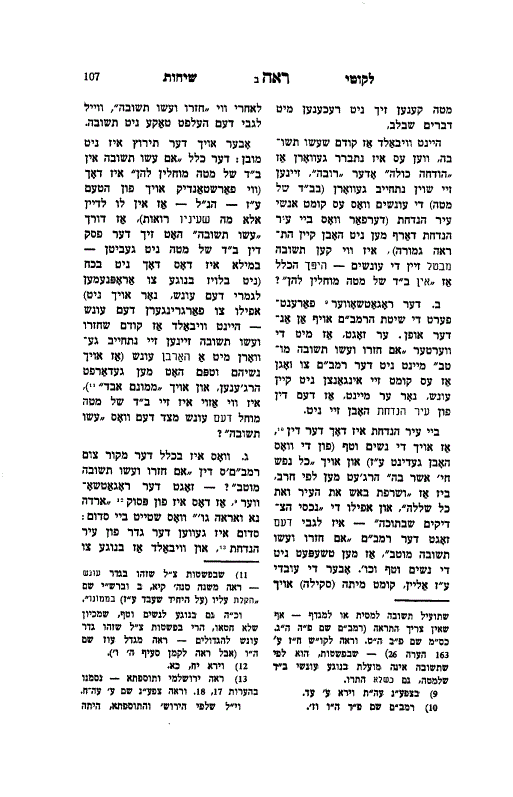
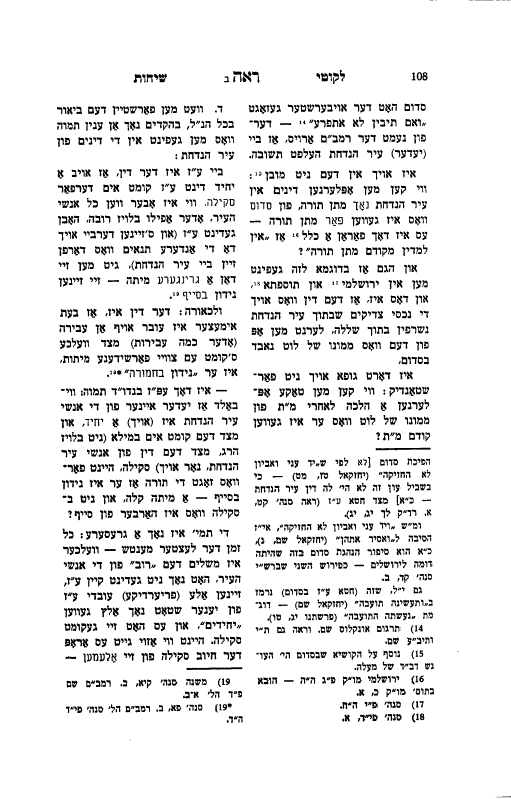
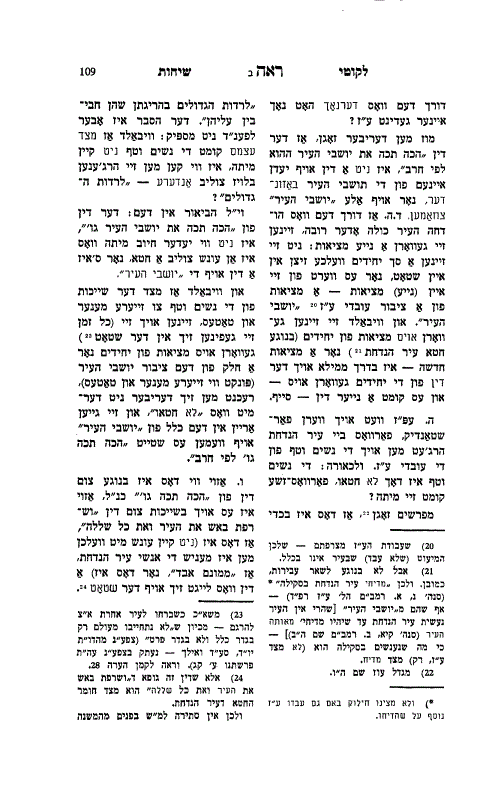
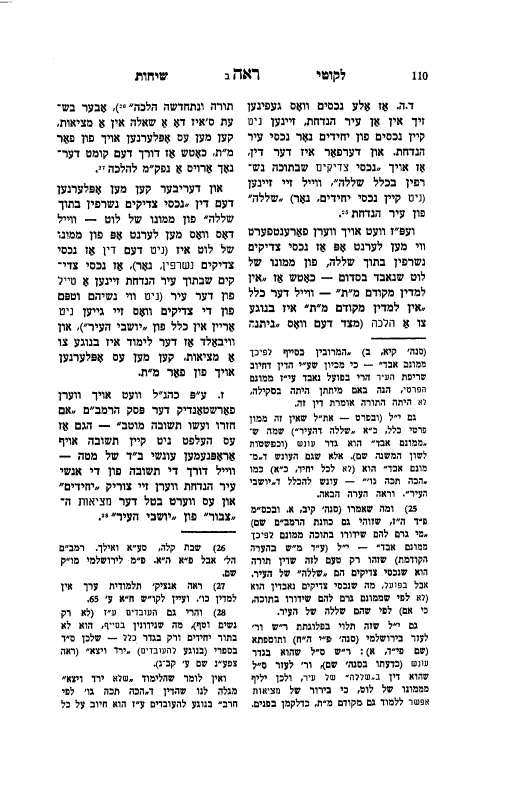
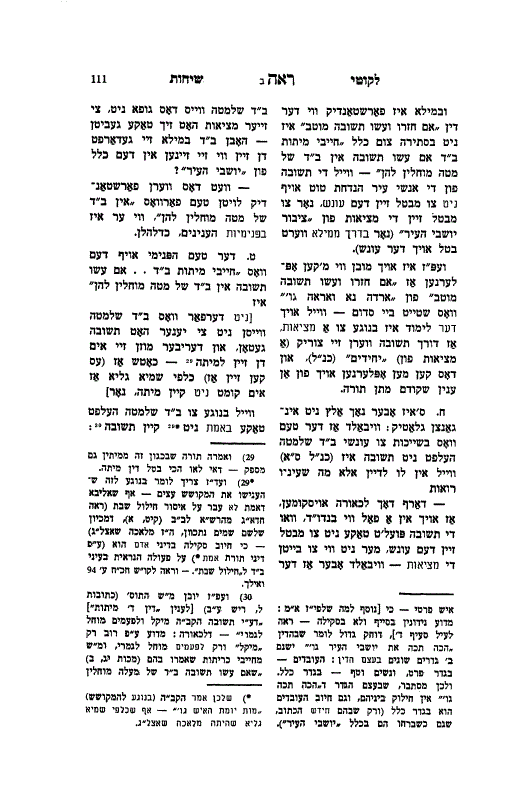
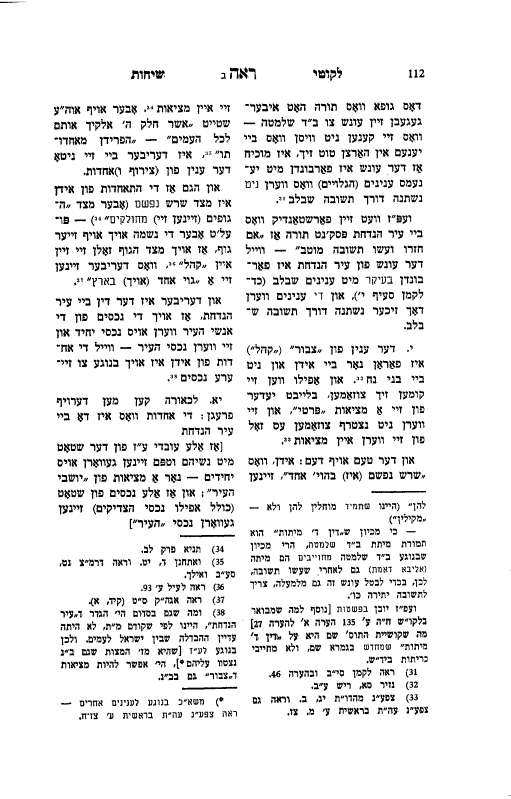
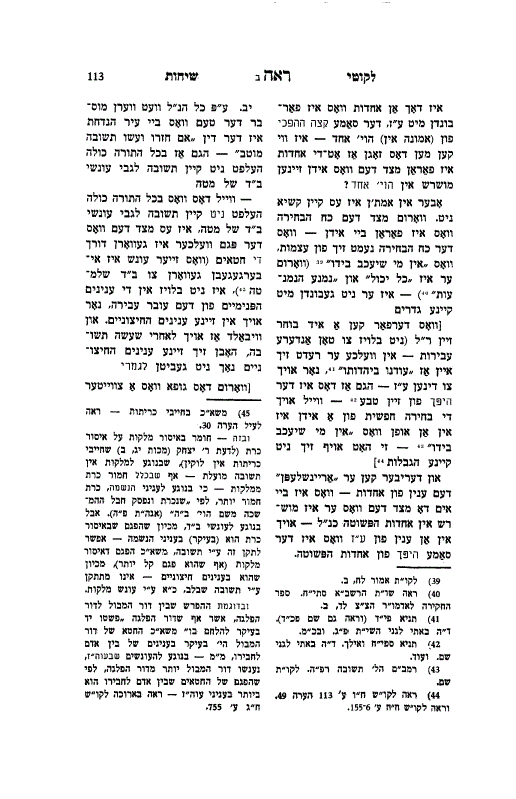
Regarding an ir hanidachas—a city whose inhabitants were led to idolatry—teshuvah is effective even after the sinners were formally warned. This is because their teshuvah does not cancel the punishment; rather, it dissolves the very existence of the community as an ir hanidachas.
The status of a true community exists only because the Jewish soul is bound to the One Hashem. Therefore, even the external blemish of the community is connected with its inner spiritual essence. Consequently, teshuvah, which corrects the inner blemish, is effective in correcting the external blemish as well.
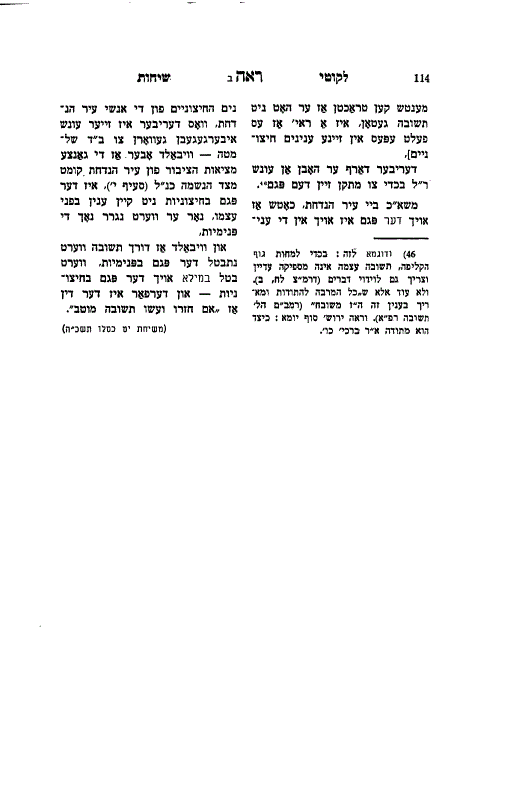
Regarding an ir hanidachas, the Rambam rules:
“If they repented, it is preferable.”
At first glance, this is difficult, as the Raavad asks: Teshuvah is generally not effective with regard to a judgment administered by an earthly court.
The Rogatchover explains that the Rambam means that after repenting, they are no longer liable under the law of an ir hanidachas, although they remain liable as individual idolaters.
This explanation, however, also requires clarification. How can the judgment of an earthly court be altered by teshuvah, which takes place within the heart?
This may be explained by first considering the following matter:
When the majority of a city’s inhabitants worship idols, their punishment changes from stoning, which is the punishment of an individual idolater, to execution by the sword, which is the punishment of the inhabitants of an ir hanidachas.
This appears difficult because the general rule is that when a person is liable for two forms of capital punishment, he receives the more severe punishment, and stoning is more severe than execution by the sword.
The explanation is that when a city acquires the status of an ir hanidachas, each individual loses his independent status as an individual and becomes part of the communal entity. He is therefore judged not as an individual idolater, but as a member of the condemned community.
This also explains why even the property of the righteous people who live in the ir hanidachas is destroyed. Their property is included because they, too, are part of the communal entity.
For this reason, the law is derived from Sodom, even though halachic rulings are generally not derived from events that occurred before the giving of the Torah. What is learned from Sodom is not a particular halachic law, but the underlying reality that even the righteous people living within a city can be considered part of that community.
This explains why teshuvah is effective for an ir hanidachas even after a formal warning was given. The teshuvah of the city’s inhabitants does not cancel their punishment directly. Rather, it eliminates the communal reality of an ir hanidachas. Once that collective identity no longer exists, the special law of an ir hanidachas no longer applies.
The fact that teshuvah is effective even though it takes place within the heart—and despite the principle that “a judge has only what his eyes can see”—can be understood through the inner spiritual meaning of the matter.
The halachic status of a true community applies only to the Jewish people. This is because the souls of the Jewish people are rooted in the One Hashem, enabling many individuals to unite and become a single entity.
The nations of the world, by contrast, do not possess this essential spiritual unity. They therefore cannot become a true communal entity in the same sense; they remain merely a collection of many separate individuals.
The reason teshuvah is generally ineffective in an earthly court may not be merely that the court cannot determine the truth of something hidden within a person’s heart. It may also be because teshuvah corrects only the inner spiritual blemish, whereas the punishment administered by an earthly court is intended to correct the external blemish created by the transgression.
An ir hanidachas, however, is different.
As explained, the inhabitants can acquire the status of a single community only because of their souls, which are bound to the One Hashem. It follows that the entire existence of the ir hanidachas—including its external transgression—is connected with the inner dimension of the Jewish soul.
Therefore, teshuvah, which corrects the inner blemish, is also effective in correcting the external blemish. This is why the Rambam rules:
“If they repented, it is preferable.”